| Tool | What it is | Best for | UK institutional presence |
|---|---|---|---|
| LabArchives | Cloud electronic lab notebook (ELN) | Multi-year wet-lab candidature needing a versioned, auditable notebook | Site-licensed at Oxford, Cambridge and Imperial College London |
| Benchling | ELN plus molecular biology data platform | Molecular biology, synthetic biology and biotech-adjacent projects | Dedicated academic offering; used by academic labs and biopharma |
| GraphPad Prism | Statistics and scientific graphing software | Classic wet-lab statistical tests and journal-style figures | Commonly departmentally licensed in life-science schools |
| SnapGene | DNA/plasmid design and visualisation software | Cloning design and sequence verification in molecular biology | Integrates directly with several ELN platforms, incl. LabArchives |
Why the tool stack matters more here than in a literature-based PhD
A wet-lab chemistry or biology doctorate generates a different kind of research record than a literature-based thesis: dated experimental protocols, raw instrument outputs, reagent batch numbers, and figures that need to be reproducible and auditable years after they were generated. Choosing the tool stack at the start of a candidature, rather than drifting into whatever a labmate happens to use, saves a genuinely difficult retrospective migration in year three. The stakes are also institutional, not just personal: most UK funders now expect a data management plan as a condition of an award, and the platform decisions below determine whether that plan can actually be honoured — a notebook without versioning cannot demonstrate a clean audit trail, and a personal laptop folder is not a fundable answer to “where will your research data be stored.”
The choice also interacts directly with your supervisory team and department, in the same way a governance route has to be settled before fieldwork begins on a nursing PhD’s HRA and IRAS approvals — ask your PI which platform the group already uses before defaulting to whatever a tutorial recommends, because a lab that standardises on one ELN loses the collaborative advantage of a shared, searchable notebook the moment one member works in a different system.
LabArchives: the versioned notebook for a multi-year candidature
LabArchives is a cloud-based electronic lab notebook built specifically to “record, organize, search and share” scientific work, with templates, chemical structure drawing, DNA file viewing, and direct integration with tools including SnapGene, GraphPad Prism and Microsoft 365. It lists Oxford, Cambridge and Imperial College London among its customers — meaning a PhD candidate at one of these institutions should check for an existing site licence before paying individually. Its main advantage for a doctoral candidature specifically is the audit trail: every entry is timestamped and versioned, which matters when an examiner or a collaborator asks what exactly was done, and when, eighteen months after the experiment ran. A worked illustration of why this matters: a candidate whose year-two results contradict a year-one finding needs to establish quickly whether the protocol changed, a reagent batch changed, or an instrument was recalibrated in between — a versioned notebook answers this in minutes by surfacing the dated entries either side of the change, where a paper notebook or an unstructured folder of files leaves the candidate reconstructing a timeline from memory during the exact period they can least afford to.
Benchling: the platform for molecular biology and synthetic biology
Benchling positions itself as a platform to “plan, record, and share experiments using a collaborative, cloud-based notebook,” with molecular biology-specific features — sequence design, plasmid maps, and workflow tools built around the kind of data a molecular or synthetic biology lab actually generates, rather than a generic notebook adapted to fit. It reports use by “200,000 scientists,” spanning both academic labs and industry, including more than half of the world’s top 50 biopharma companies, and maintains a dedicated academic offering separate from its enterprise product. For a candidate whose research centres on plasmid design, CRISPR constructs, or other molecular-biology-specific workflows, Benchling’s purpose-built sequence tools are a genuine advantage over a general-purpose ELN like LabArchives. Where a lab already runs shared construct libraries across several PhD students and postdocs, Benchling’s registry features let a candidate build on a colleague’s validated plasmid rather than re-designing and re-verifying a construct that already exists in the group’s collection — a genuine time saving that a generic notebook does not offer in the same structured way.
GraphPad Prism: statistics built around what wet-lab data actually looks like
GraphPad Prism runs the statistical tests wet-lab biology and chemistry theses use most often — t-tests, ANOVA, non-linear regression for dose-response curves, and survival analysis — with output built to become a publication-ready figure directly, rather than requiring a separate plotting step. This is the meaningful difference from the general statistical environments compared for a data-science doctorate: Prism is scoped narrowly to the designs and figure conventions a wet-lab paper actually uses, at the cost of being far less flexible than R or Python for anything outside that scope. Check your department’s existing site licence before assuming you need a personal one — Prism is commonly licensed at faculty or departmental level in UK life-science schools, and a candidate who buys an individual licence without checking often finds one was already available. This departmental-licence question is the same one that determines the right answer for a broader postgraduate data-science candidature — see how R, Python, SPSS and Stata compare on institutional licensing for a project without a strong wet-lab component, where the calculus tips more towards a free, general-purpose language than a paid, discipline-specific package.
SnapGene: cloning design that catches errors before the bench work does
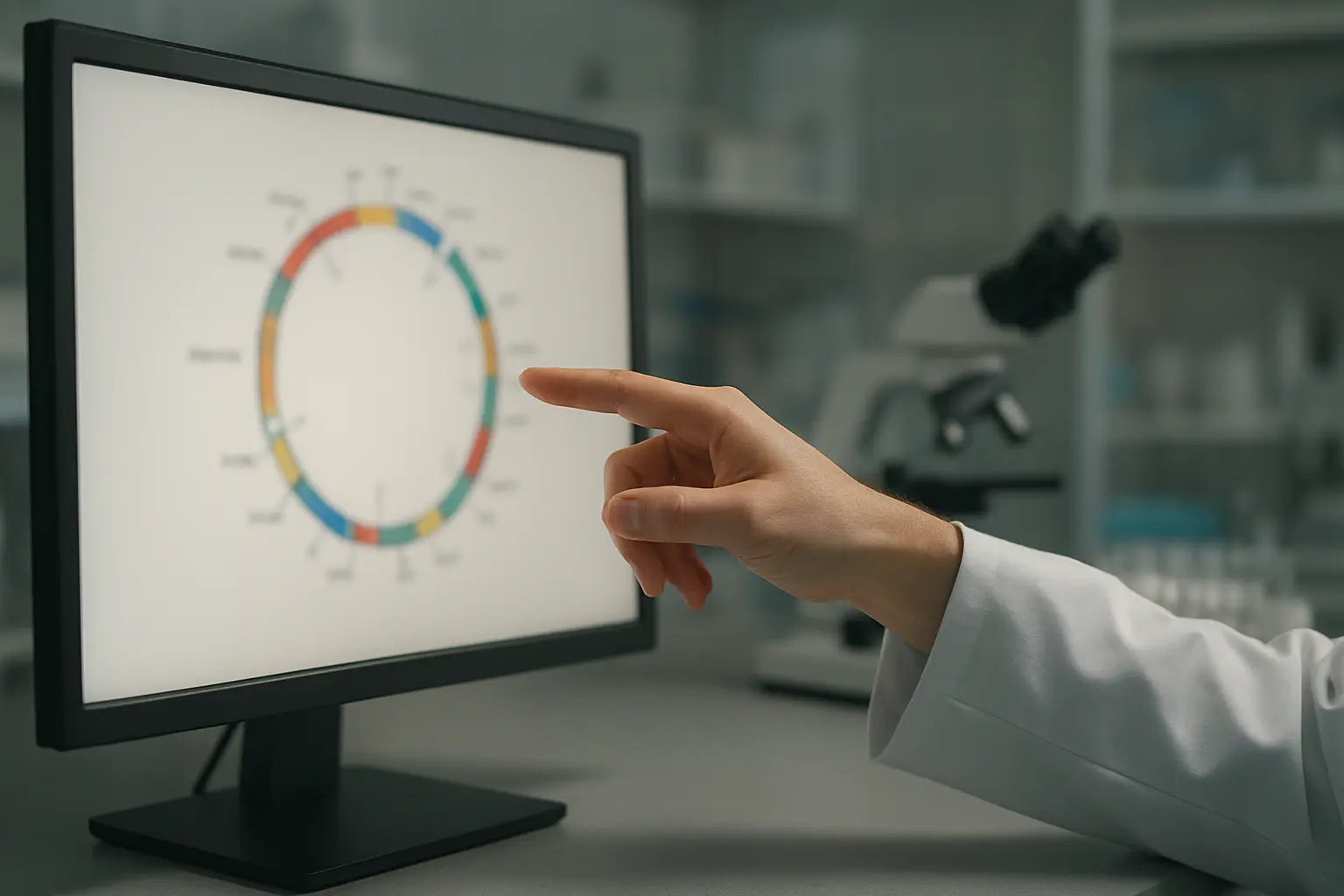
SnapGene handles plasmid and primer design, restriction site mapping, and sequence verification against a designed construct — the kind of design-stage checking that, done on paper or in a spreadsheet, is where cloning errors most often go undetected until a failed experiment reveals them weeks later. Its direct integration with LabArchives means a plasmid map and its design rationale can sit inside the same notebook entry as the resulting experimental record, rather than living in a separate, disconnected file. The design-verification step SnapGene automates — checking a proposed construct’s sequence against the intended restriction sites and primer-binding regions before ordering reagents or committing bench time — is exactly the kind of upfront check that a purely narrative methods description cannot substitute for; a chapter that describes the intended construct is not evidence that the construct was actually verified before use, and an examiner who asks how a cloning error was ruled out needs a specific answer, not a description of intent.

Data management plans and where the raw data actually lives
UKRI and most UK research funders now require a data management plan as part of a studentship or grant application, specifying where research data will be stored, for how long, and how it will be made available where appropriate. An ELN answers the “where” question directly for the experimental record itself, but raw instrument output — chromatography traces, microscopy files, sequencing reads — is usually too large to store inside the notebook platform and needs a separate, university-supported repository or storage allocation. Confirm with your department’s research data team, early in your candidature, which storage service is expected to hold this raw data long-term, and link your ELN entries to it by reference rather than assuming the notebook itself is the archive.
Budgeting the tool stack against a stipend, not a grant
Where an ELN, statistics package or design tool is not already covered by an institutional site licence, the cost falls to the individual candidate or their supervisor’s grant, and this varies far more between departments than candidates expect walking in. Ask explicitly, before committing to a tool, whether the cost is covered centrally, by your specific lab’s grant, or by you personally — a discipline-specific package like GraphPad Prism or Benchling can carry a genuinely meaningful annual cost for a self-funded candidate, and confirming coverage in month one avoids an unwelcome discovery when a licence renewal notice arrives in year two with no clear budget line to pay it from.
Which stack should you actually run?
For a standard wet-lab chemistry or biology PhD with no strong molecular-biology-specific need, LabArchives as the notebook plus GraphPad Prism for statistics and figures covers the great majority of the candidature, and both are commonly already licensed at UK research-intensive institutions — check before you pay. For a molecular or synthetic biology project centred on cloning, plasmid design, or sequence-level work, Benchling’s purpose-built molecular tools, combined with SnapGene for cloning design specifically, are worth the switch even where a general ELN is already available, because the sequence-specific tooling saves real time at the design stage rather than only at the record-keeping stage. Neither stack replaces a reference manager for the literature side of the thesis — see how Zotero, Mendeley and EndNote compare for a PhD’s citation library for that separate decision, since an ELN and a reference manager solve entirely different problems and candidates sometimes waste time hunting for citation features inside a notebook platform that was never built to provide them.
FAQ
Does my university already have a licence for LabArchives?
Possibly — Oxford, Cambridge and Imperial College London are named LabArchives customers. Check with your library or research computing team before purchasing an individual licence.
Is Benchling only for industry, or do academic labs use it too?
Both. Benchling maintains a dedicated academic offering alongside its enterprise product, and academic labs are among its stated user base of 200,000 scientists.
Do I need GraphPad Prism if I already know R or Python?
Not necessarily, but Prism’s output is built directly for publication-style figures used in wet-lab papers, which can be faster for standard designs than building equivalent plots from scratch in R or Python.
What does SnapGene integrate with?
SnapGene integrates directly with several electronic lab notebook platforms, including LabArchives, letting a plasmid design and its experimental record sit in the same entry.
Should I choose my ELN before or after choosing my statistics software?
Before. Your notebook is where your data and protocols live for the whole candidature; your statistics and graphing tool should fit into that record, not the other way around.
Can I switch ELN platforms partway through a PhD?
It is possible but genuinely disruptive — migrating years of timestamped, versioned entries is a real project. Choose the platform your department already supports at the start of your candidature where possible.
Does a wet-lab PhD need a reference manager as well as these tools?
Yes, for the literature side of the thesis, but that is a separate tool category — the ELN, statistics and design tools here cover the experimental record, not citation management.
Does UKRI require a specific storage platform for wet-lab research data?
UKRI and most UK funders require a data management plan stating where data will be stored and for how long, but they do not mandate a specific commercial platform — check with your department’s research data team which university-supported repository is expected to hold your raw data long-term.
Can raw instrument data live inside an ELN like LabArchives?
Small files can, but large raw outputs such as sequencing reads or high-resolution imaging are usually better held in a dedicated, university-supported storage repository and linked from the ELN entry by reference, rather than uploaded directly into the notebook.
Set your tool stack up before your first experiment
The tool decisions above are cheapest to make in month one and most expensive to unwind in year three. Tesify’s thesis writing workspace then helps you turn the resulting notebook entries and figures into methods and results chapters without re-transcribing your experimental record by hand.