A history PhD that uses a digital method — text encoding, network analysis, text mining a digitised archive — has to answer one question an examiner will ask directly: is the digital method just how you processed your sources, or is it part of what makes your contribution original? Get that answer wrong and the strongest chapter in the thesis can read as a technical appendix rather than a contribution to knowledge. Get it right and the same work becomes the thing that makes your thesis defensible against the objection every digital humanities project eventually faces: “couldn’t you have just read the sources?”
What Counts as an Original Contribution When the Method Is Digital?
The UK’s own standard for a PhD contribution — a genuinely new addition to knowledge in the field, defensible at viva — does not change because the method is digital, but the argument for originality has to be made explicitly rather than assumed. Three shapes of contribution recur in history PhDs using digital methods, and knowing which one your project actually is changes what your methodology chapter needs to defend:
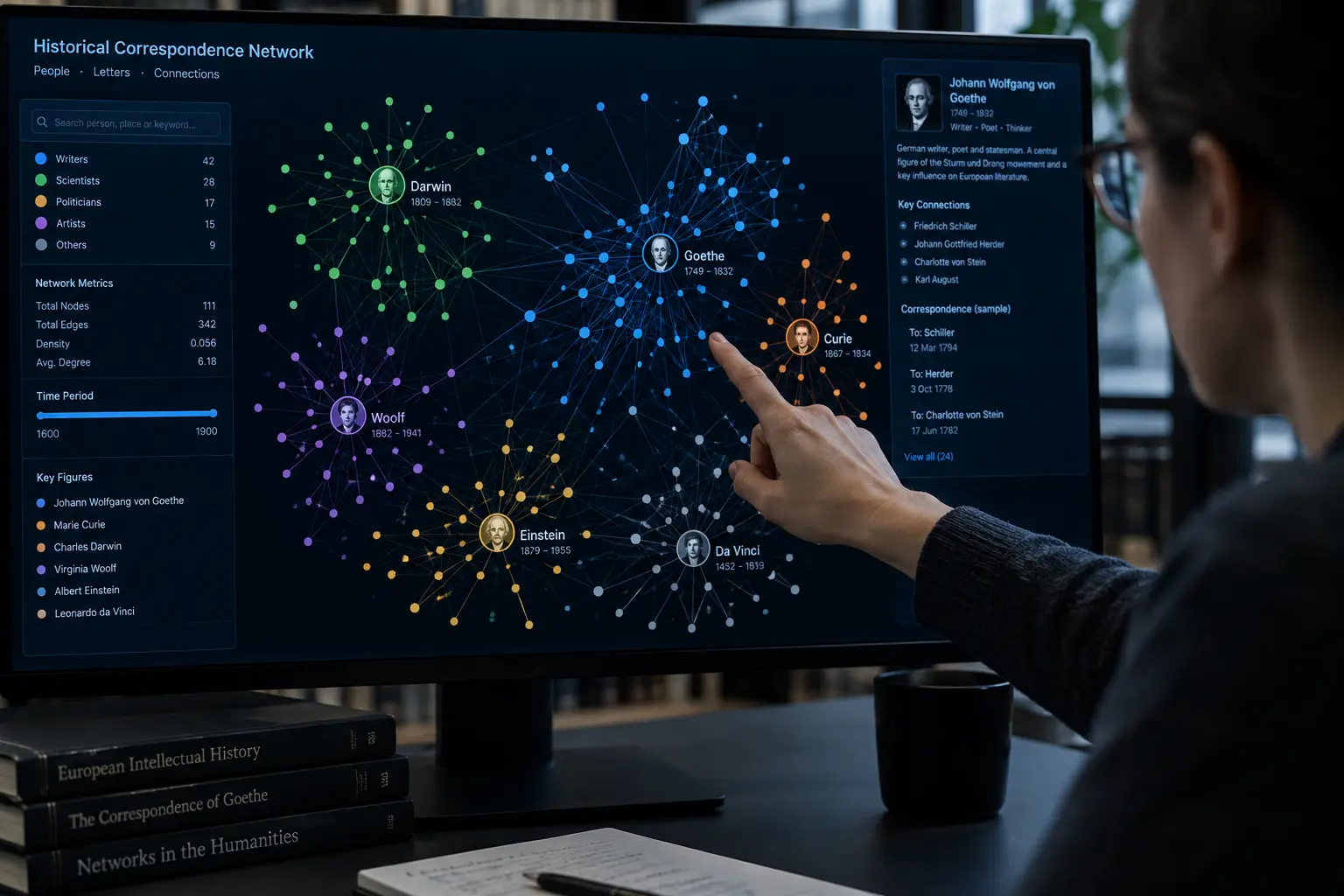
- The method reveals a pattern invisible to close reading alone. A network analysis of thousands of pieces of correspondence, or a text-mining pass across a digitised newspaper archive too large for any one person to read in full, surfaces a pattern — a previously unnoticed connection, a shift in vocabulary over time — that becomes the historical finding itself.
- The method produces a new scholarly resource. A TEI-encoded critical edition of a manuscript, or a structured dataset built from an archive that previously existed only as unindexed images, is a contribution in its own right, independent of whatever historical argument you also build on top of it.
- The method tests an existing historical claim at a scale no prior study reached. Where a historian has previously made a claim based on a sample of sources, a digital method applied to the full surviving corpus can confirm, qualify or overturn that claim — the contribution is the scale, not the technique itself.
A thesis that cannot say which of these three its digital chapter is doing — or that treats the method as simply a faster way to do what close reading would have done anyway — is the version of this project an examiner will push hardest on. Say explicitly, in the introduction and again in the methodology chapter, which of the three you are claiming, and defend that specific claim rather than a general one about digital methods being valuable.

Text Encoding as a Contribution: What TEI Actually Standardises
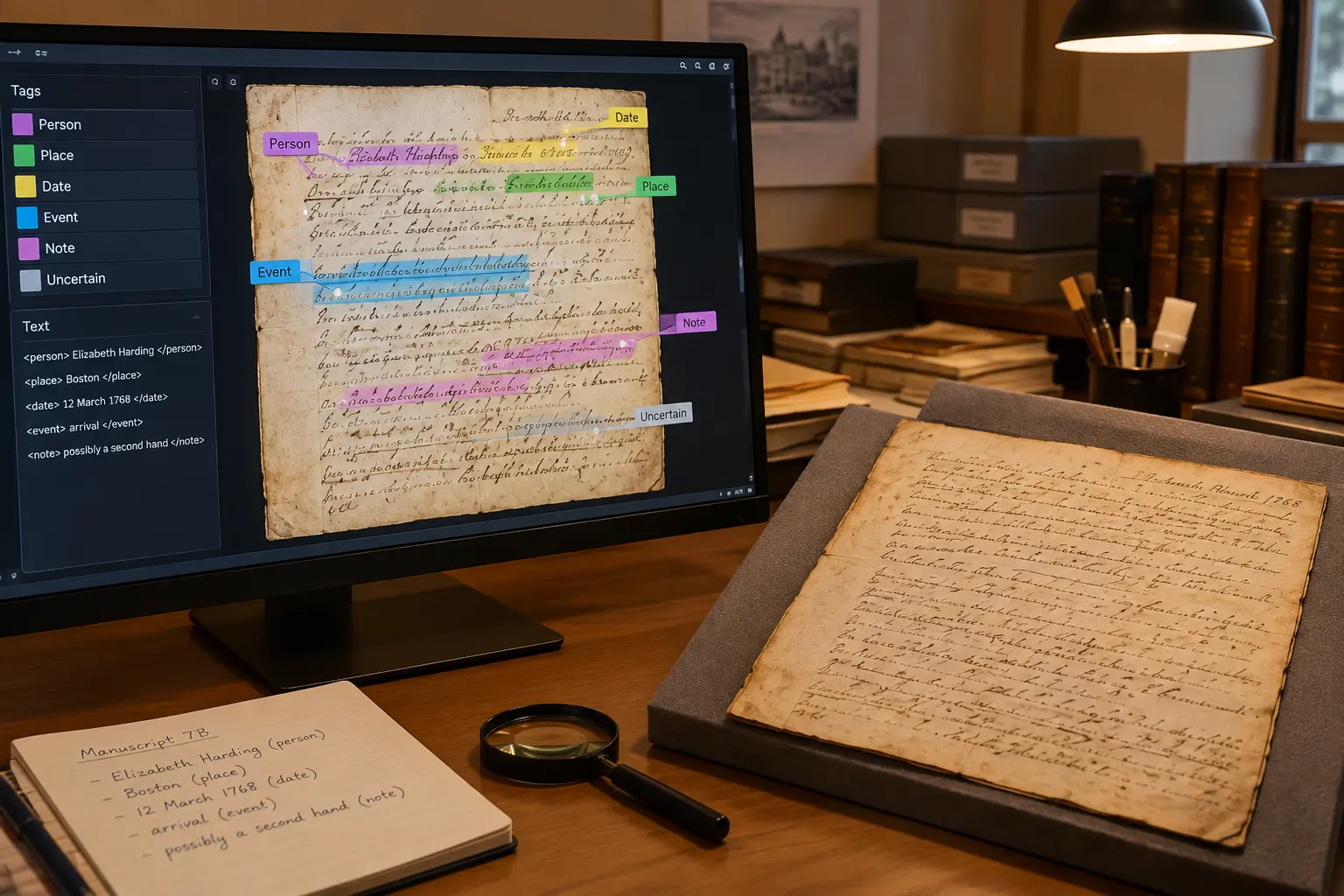
The Text Encoding Initiative (TEI), a text-centric community of practice in digital humanities operating continuously since the 1980s, maintains the guidelines most digital scholarly editions in history are built on. Work on the standard began in 1987, when a group of scholars in the humanities, linguistics and computing convened at Vassar College to establish its founding principles; the Guidelines now define an XML-based encoding framework of more than 580 individual elements for representing textual components and concepts, deliberately semantic rather than presentational, and customisable to a specific project’s needs. Major projects built on TEI include the Perseus Project (Greek and Latin texts) and the Women Writers Project, and GitHub alone hosts more than two million TEI XML files — a scale that signals TEI encoding is an established scholarly practice, not a niche or unproven one.
For a history PhD, producing a TEI-encoded edition of a previously unencoded manuscript or document collection is a defensible contribution on its own terms: it makes a source usable, searchable and citable at a structural level (marking named persons, places, dates, editorial interventions and textual variants explicitly) in a way a plain digitised image or an untagged transcript cannot. The methodology chapter needs to state which TEI elements you used and why, not just that you “encoded the text in TEI” — the specific encoding decisions (how you marked uncertain readings, how you handled multiple manuscript witnesses, whether you encoded at the word or phrase level) are themselves scholarly choices an examiner can and will ask you to justify.
Network and Spatial Analysis as a Contribution: What Digitised Sources Now Make Possible
Large-scale digitised primary-source archives are what make network and spatial analysis viable as a thesis method rather than a curiosity. The Old Bailey Proceedings Online, for instance, is a fully searchable, digitised collection of all surviving editions of the Old Bailey Proceedings from 1674 to 1913 and the Ordinary of Newgate’s Accounts from 1676 to 1772, covering over 197,000 trials and biographical detail on around 2,500 people executed at Tyburn. It began as a collaboration between the University of Hertfordshire, the Open University and the University of Sheffield, initially funded by the AHRC among others. A dataset at that scale supports a genuinely new kind of question — patterns in sentencing, in offence type, in the language witnesses used, across more than two centuries — that no historian working from the printed volumes alone could have asked in the same way.
The contribution in this kind of project is specifically the pattern the scale reveals, not the existence of the digitised source itself (which the Old Bailey Proceedings Online already provides to anyone). Your thesis has to add something to what the archive itself offers: a specific analytical question, a specific method applied to answer it, and a specific historical claim that follows from the result.
Learning the Tools Without a Computer Science Background
You do not need a computer science degree to run a competent digital humanities chapter, but you do need to learn the specific tool properly enough to defend every methodological choice at viva. The Programming Historian publishes, in its own words, “novice-friendly, peer-reviewed tutorials that help humanists learn a wide range of digital tools, techniques, and workflows to facilitate research and teaching,” released under a CC-BY licence and therefore free to use. It currently offers 124 lessons in English, plus parallel tutorial sets in Spanish, French and Portuguese — a large enough library that most standard digital-history methods (text mining, network analysis, mapping, basic TEI encoding, working with tabular historical data) have a peer-reviewed, citable tutorial you can point to directly in your methodology chapter, rather than a vague reference to “online resources.”
Citing the specific Programming Historian lesson you followed, and noting where your own project departed from its default approach, is itself part of demonstrating methodological competence — an examiner reading a careful methodology section can tell the difference between a student who followed a tutorial and understood every step, and one who ran a script without understanding what it did.
Framing the Thesis: Problem, Method, Contribution, in That Order
The order you present these three elements in matters. State the historical problem first — the question a historian, not a computer scientist, would recognise as worth answering. State the method second, and justify it against the alternative (why this method, at this scale, rather than a traditional close-reading approach to a smaller sample). State the contribution last, in terms of the three shapes above: a revealed pattern, a new resource, or a claim tested at new scale. A thesis that opens by describing the digital tool before establishing why the historical question needed it reads, to an examiner, as method in search of a problem rather than the reverse — the same basic discipline that what counts as an original contribution to knowledge in a UK PhD thesis describes for any field applies here with extra weight, precisely because digital methods invite the opposite ordering by default.
Build the digital work into your overall thesis timeline as its own distinct phase with its own risk of delay — learning a new tool, encoding a corpus, or cleaning a scraped dataset routinely takes longer than expected, and a multi-year plan that treats the digital chapter as a quick technical step between two “real” historical chapters is the plan most likely to slip. The general principle of building a realistic, phased multi-year plan is covered in a PhD thesis chapter planner that covers the whole candidature, and applies to a digital-methods chapter as much as any archival research trip.
An Honest AI Workflow Alongside Digital History Methods
If you are using an AI tool to help write up a digital-methods chapter — summarising a large text-mining output, drafting the prose description of a network-analysis result — the same rule applies as to any unpublished thesis material: check what a tool does with your data before you paste in anything from an unpublished corpus, a digitisation project you do not have full rights to redistribute, or a dataset under an access agreement with restrictions of its own. The general principles are covered in is it safe to put unpublished thesis data into an AI tool, and the same care applies to a scraped or licensed historical dataset as to interview transcripts in any other discipline. Whichever tools you use, including Tesify, the thesis itself — the argument, the method, the contribution — stays 100% written by you.
The general archives and databases a UK history PhD is built on beyond digital-methods projects specifically — Discovery, Archives Hub, the British Newspaper Archive, EEBO-TCP and more — are covered separately in which archives and databases should a history PhD actually use; read that alongside this piece if your project combines a digital-methods chapter with more conventional archival research elsewhere in the thesis.
Frequently Asked Questions
Is using digital tools in a history PhD automatically an original contribution?
No. The contribution has to be argued explicitly as one of three shapes: a pattern the method reveals that close reading could not, a new scholarly resource the method produces, or an existing claim tested at a new scale — not simply that a digital tool was used.
What is the Text Encoding Initiative (TEI)?
A digital humanities community of practice operating since the 1980s that maintains an XML-based encoding standard of more than 580 elements for marking up textual components, used by major projects including the Perseus Project and the Women Writers Project.
Do I need to learn to code to do digital history?
Not necessarily to a professional software-engineering standard, but you do need to understand every methodological choice well enough to defend it at viva. The Programming Historian’s peer-reviewed, novice-friendly tutorials (124 in English alone) are built for exactly this level of competence.
What is Old Bailey Online an example of?
A large-scale digitised primary-source archive (over 197,000 trials, 1674–1913) that makes network and pattern-based historical questions possible at a scale no historian working from the printed volumes alone could reach.
Should I describe my digital tool before my historical question in the thesis?
No. State the historical problem first, the method and its justification second, and the contribution last. Leading with the tool reads as method in search of a problem.
How long should I budget for learning a new digital tool?
Longer than it feels like it should take. Treat the digital-methods work as its own distinct phase in your multi-year plan with its own risk of delay, not a quick step between two conventional archival chapters.
Can I use TEI encoding as my whole thesis contribution?
Yes, if defended properly — a TEI-encoded edition of a previously unencoded source is a scholarly contribution independent of whatever historical argument is built on top of it, provided your specific encoding decisions are justified, not just described.
Is Programming Historian free?
Yes. It is released under a CC-BY licence and openly accessible, with 124 English lessons plus parallel Spanish, French and Portuguese tutorial sets.
Can I use AI tools to help write the digital-methods chapter?
For structuring and drafting the prose, yes, with the same caution as any unpublished or restricted-access material: check a tool’s data-handling terms before pasting in anything from a licensed dataset or an unpublished digitisation project.
How does a digital-methods chapter fit with traditional archival chapters in the same thesis?
Commonly as complementary evidence bases — a digital chapter revealing a large-scale pattern, supported by close archival reading of a smaller set of especially revealing cases elsewhere in the thesis. State clearly which job each chapter is doing.