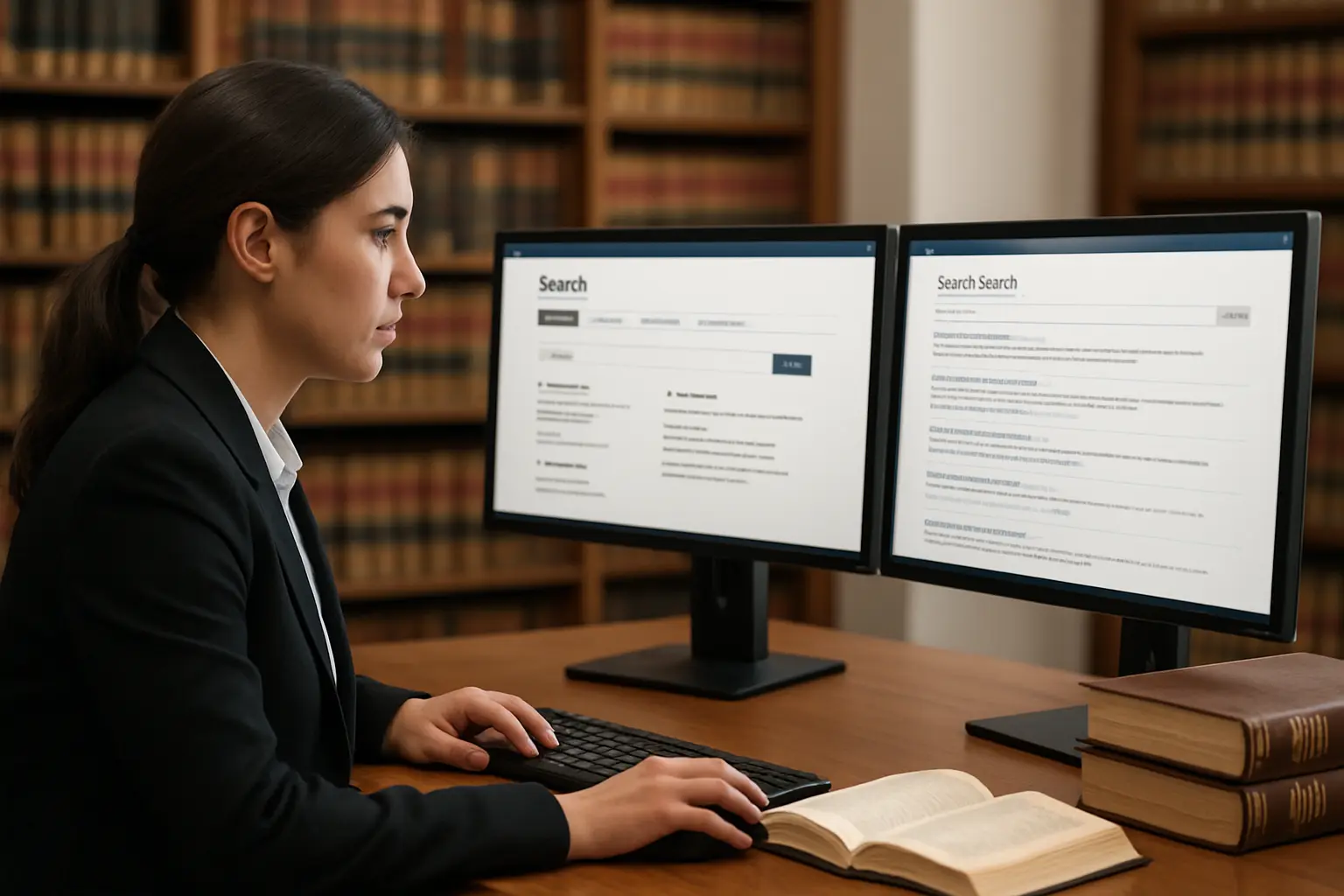
For a UK law PhD, Westlaw UK and Lexis+ UK remain the two platforms almost every doctrine-heavy thesis needs institutional access to, because they are the only ones with a full case citator showing whether a precedent is still good law; vLex adds the strongest comparative and international coverage; HeinOnline is the one to add for historical or law-review-heavy theses; and the free National Archives’ Find Case Law is a genuinely useful supplement, not a substitute, since it carries no citator at all. BAILII, the other well-known free source, is covered separately below for a reason.
| Platform | Cost to you | Citator (good-law check) | Strongest for | Weakest for |
|---|---|---|---|---|
| Westlaw UK | Free via most UK law schools | Yes — Case Analysis documents | UK case law, statutory annotations | Comparative/international depth |
| Lexis+ UK | Free via most UK law schools | Yes — case-status signals | UK case law, practitioner commentary | Overlaps heavily with Westlaw — few theses need both |
| vLex | Often free via a university subscription; check yours | Partial, improving | Comparative and Latin American/European law | UK statutory annotation depth |
| HeinOnline | Usually free via a university subscription | No | Historical statutes, law reviews, treaties | Current case-law currency |
| Find Case Law (National Archives) | Free, no login | No | Official neutral-citation judgments, open access | No citator, no journals, no statutory annotation |
| BAILII | Free, no login | No | Breadth of tribunal and older judgments | Automated access is proof-of-work-walled — see below |
“Free” in the cost column above means free to you as a candidate, not free to the institution — every one of the four subscription platforms is a significant annual licence cost the university absorbs, which is exactly why coverage and renewal terms vary between institutions and why a candidate should never assume a platform their previous university held will also be held by a new one after a transfer or a joint-supervision arrangement.
The ranked shortlist
1. Westlaw UK and Lexis+ UK — pick the one your institution licenses, not both
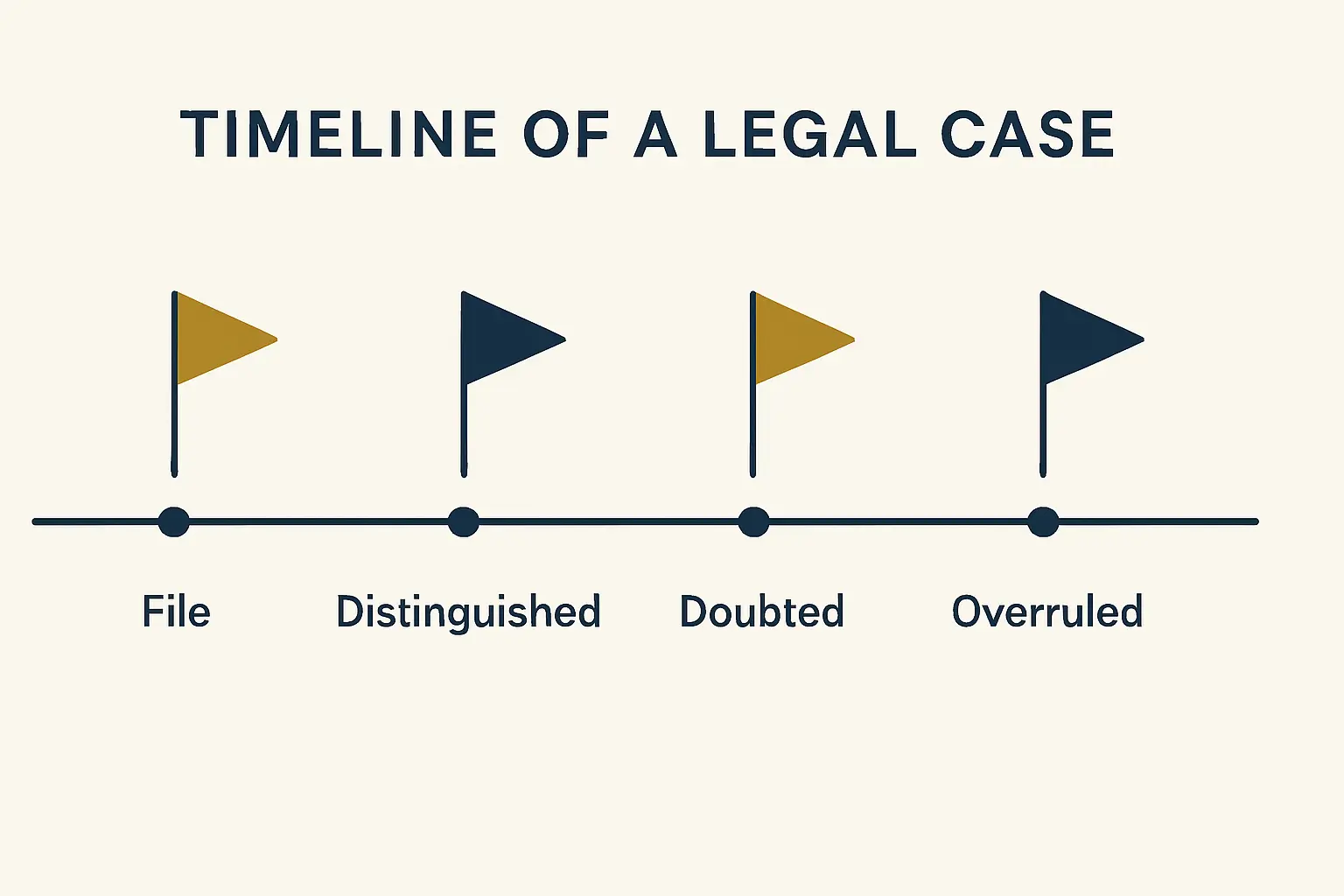
Both platforms carry a full citator: Westlaw UK’s Case Analysis documents and Lexis+ UK’s case-status signals both tell you, at a glance, whether a case has been followed, distinguished, doubted or overruled — the single feature that separates a professional legal-research platform from a free case archive. Both also carry consolidated, annotated statute text showing amendments and commencement dates in one view, which neither of the free sources below does reliably. For a doctoral thesis, the practical advice most UK law librarians give is the same: learn whichever platform your own institution licenses thoroughly, rather than splitting research time across both, since their coverage of standard UK reported case law overlaps heavily and the real differentiator between them is interface and specific practitioner-note content, not raw coverage.
2. vLex — the strongest single platform for comparative or international law doctorates
Where a thesis is explicitly comparative — EU law post-Brexit analysis, Commonwealth jurisdictions, Latin American or continental European law — vLex’s aggregation of national law databases across dozens of jurisdictions in one search interface has no real UK equivalent. Its case-treatment information has improved, and it now sits alongside the platform’s Vincent AI research assistant, but it is not yet as exhaustive on UK case law specifically as Westlaw or Lexis+, so a thesis that is both UK-doctrinal and comparative typically needs vLex alongside one of the two majors, not instead of either.
3. HeinOnline — for historical, law-review-heavy or treaty-heavy work
HeinOnline’s core value for a doctoral thesis is depth backward in time: complete law-review archives back to a journal’s first issue, historical statute compilations, and a full text treaty database, none of which Westlaw or Lexis+ prioritise to the same degree. It carries no citator and should never be the platform a candidate relies on to check whether a case is still good law — its job in a doctoral toolkit is finding the material the two majors do not hold, not replacing them.
4. Find Case Law (The National Archives) — the right free supplement, not a substitute
Find Case Law, run by The National Archives, is the official repository for judgments carrying a neutral citation, openly accessible with no login and no institutional dependency — useful for verifying a specific judgment’s official text, and for a candidate who has lost institutional access after their funded period ends. It carries no citator, no journal content and no statutory annotation, so it supplements Westlaw or Lexis+ rather than replacing either for doctoral-scale research.
5. BAILII — genuinely wide free coverage, with one first-hand accessibility caveat
BAILII remains one of the widest free case-law archives available, including tribunal decisions the commercial platforms sometimes do not carry in full. One practical note worth recording here: automated or scripted access to BAILII is blocked behind a proof-of-work bot challenge on at least some paths, which matters if a candidate is trying to bulk-verify citations programmatically rather than browsing normally in a browser — ordinary browser use is unaffected, but a citation-checking script built against BAILII directly may need Find Case Law as a more script-friendly alternative for the same judgments where one exists.
The one clear recommendation
Learn your institution’s licensed major platform (Westlaw UK or Lexis+ UK, whichever it holds) properly before adding anything else — most UK law doctorates never need both. Add vLex only if the thesis is genuinely comparative or international in scope. Add HeinOnline specifically for historical, law-review or treaty-heavy chapters. Keep Find Case Law bookmarked as the free fallback for verifying a specific judgment once institutional access is uncertain, particularly useful in the final writing-up year or after graduation when licences typically lapse. Once a source is found and verified on one of these platforms, Tesify’s automatic bibliography tool formats the in-text citation and reference entry to your department’s house style, keeping hundreds of case and statute citations consistent from the first chapter draft to final submission.
How does doctoral use actually differ from undergraduate or practitioner use of the same platforms?
An undergraduate typically uses Westlaw or Lexis+ to find one or two authorities for a problem question; a practitioner uses them to build advice against a live client matter with a deadline in days. A doctoral candidate’s use pattern is different from both: systematic, exhaustive tracing of a doctrine’s development across decades, often needing every reported decision on a specific point rather than the leading two or three cases, and needing the citator not just to check a single case but to map an entire line of authority’s evolution across a chapter. This is the use pattern that makes the citator, rather than raw search, the platform feature that actually matters most at doctoral scale — an undergraduate rarely needs to trace how a line of authority shifted across fifteen cases over thirty years, and a doctoral thesis chapter often does exactly that. Setting up a saved-search or alert on the platform for each core doctrine early in the candidature, rather than re-running the same search manually every few months, is a small habit that saves real time across a three-to-four-year project.
A practical access checklist before you commit research time to a platform
| Check | Why it matters for a multi-year thesis |
|---|---|
| Does your library hold Westlaw UK, Lexis+ UK, or both? | Determines your default major platform without an extra step |
| Does your library’s vLex subscription include the jurisdictions your comparative chapter needs? | Some institutional vLex packages are UK/EU-only, not global |
| Is HeinOnline’s law-review coverage included, or a separate add-on? | Affects whether historical-chapter research needs a document-delivery request instead |
| What happens to your access the day you submit? | Corrections and resubmission periods can run months after submission; confirm whether access survives that window |
What this means for citation practice, not just discovery
Finding a case is a different job from citing it correctly — the site’s dedicated piece on citing UK legislation and case law (OSCOLA fifth edition) covers the citation formatting these platforms’ own export tools do not always get right, and the two should be used together: discover and verify on the platform, format to OSCOLA before it reaches the thesis.
How does this differ from a general reference-manager comparison?
None of the platforms above manage your bibliography the way Zotero, Mendeley or EndNote do — a legal research platform finds and verifies primary and secondary sources, a reference manager stores and formats the citation once you have decided to use it. A law doctorate typically needs both: a legal research platform for the sources this piece compares, and a reference manager for the wider secondary literature a socio-legal or comparative thesis also draws on. Where a thesis is doctrinal rather than socio-legal, the site’s own piece on how a law PhD thesis is structured sets out how much of the thesis this platform-driven research actually has to carry, chapter by chapter.
Frequently asked questions
Do I need both Westlaw UK and Lexis+ UK for a law PhD?
Rarely. Case coverage overlaps heavily for standard UK reported case law, and most UK law librarians advise learning whichever platform your own institution licenses in depth rather than splitting research time across both.
What is a citator, and why does it matter so much for a doctoral thesis?
A citator tells you whether a case has since been followed, distinguished, doubted or overruled — citing a case an examiner knows has since been overruled, without acknowledging it, is one of the fastest ways to undermine a doctrinal chapter’s credibility.
Is BAILII actually unusable for research?
No — ordinary browser use works normally; the accessibility issue noted above affects only automated or scripted bulk access, which most doctoral researchers browsing case by case will never encounter.
Which platform is best for a comparative EU/UK law thesis after Brexit?
vLex’s cross-jurisdiction aggregation is the strongest single tool for that specific comparative task, typically used alongside Westlaw UK or Lexis+ UK for the UK-domestic doctrinal half of the same thesis.
Will I lose access to these platforms after I finish my PhD?
Institutional licences for Westlaw UK, Lexis+ UK and most vLex and HeinOnline subscriptions end when your student status does, though some universities offer a brief alumni grace period — the free Find Case Law and BAILII archives remain the reliable fallback once institutional access lapses.
Does Find Case Law replace BAILII for most purposes?
Not entirely — Find Case Law covers judgments carrying a neutral citation from the courts it was built to serve, while BAILII’s coverage extends more widely into tribunal decisions and older material; the two are complementary free sources rather than substitutes for each other.
Do these platforms format citations to OSCOLA automatically?
Their own export and “cite this case” tools produce a citation, but not always to current OSCOLA fifth-edition conventions — check any platform-generated citation against the site’s own OSCOLA guide rather than trusting the export unchecked.
Is HeinOnline worth learning if my thesis is purely doctrinal and current?
Usually not as a priority — its comparative advantage is historical and law-review depth, which matters most for theses with a significant historical, comparative-doctrinal, or treaty dimension rather than a purely current doctrinal analysis.
Should I check my access will survive a resubmission or corrections period?
Yes — this is one of the most commonly missed practical details. If corrections or a resubmission could run months after submission, confirm with your library whether platform access survives that window before you rely on it for post-viva revisions.
Does a doctoral candidate use these platforms differently from an undergraduate?
Yes — doctoral use is systematic and exhaustive rather than selective, typically tracing a whole line of authority across decades via the citator rather than finding the two or three leading cases a problem question needs.
Is it worth setting up saved searches or alerts on these platforms?
Yes, particularly for a multi-year thesis — a saved alert on each core doctrine flags new judgments and legislative amendments as they happen, rather than requiring the candidate to re-run the same manual search every few months and risk missing something between checks.