
A thesis by publication has a formatting problem a traditional monograph does not: each chapter is a paper still moving through, or just out of, peer review, and every revision — a reviewer’s requested change, a journal’s house style, an added co-author — risks breaking the formatting consistency of the whole document if you are hand-fixing it chapter by chapter. Retyping headings, renumbering references and re-checking the introduction and discussion against a paper you have since revised is not just tedious; it is where formatting errors that examiners actually notice creep in.
Why Thesis-by-Publication Formatting Is Genuinely Different
A monograph thesis is written once, chapter by chapter, in one voice and one format from the start. A thesis by publication assembles chapters that were each written to satisfy a different journal’s house style, often by more than one author, and often revised multiple times after your own thesis draft was already built around an earlier version. The institution-specific rules covering this format — minimum paper counts, word limits on the connecting introduction, whether MPhil is excluded, principal-authorship requirements — are covered directly from two universities’ own regulations in what is a thesis by publication: the UK rules, institution by institution; this piece is about the formatting workflow once you know which rules apply to you, not the rules themselves.
A Worked Example of the Cascade Problem
An illustrative, invented sequence shows how one small revision can cascade if the underlying document is not built to absorb it. Paper two of a three-paper thesis comes back from peer review with a reviewer requesting a new robustness check, which adds a subsection, renumbers the paper’s own tables from that point onward, and shifts its conclusion’s wording slightly. If the thesis was assembled by pasting a finished copy of each paper into a Word document and manually formatting around it, that single revision means: renumbering every cross-reference to paper two’s tables anywhere else in the thesis, checking whether the introduction’s summary of paper two’s findings still matches the revised conclusion, and re-checking the reference list in case the new subsection cites something not already in your working bibliography. None of these steps is individually hard; the risk is that with three papers and several revision rounds, some cascade gets missed, and it surfaces at the worst possible time — in examiners’ comments after submission.
Generic Practice 1: A Master Document With Styles, Not Manual Formatting
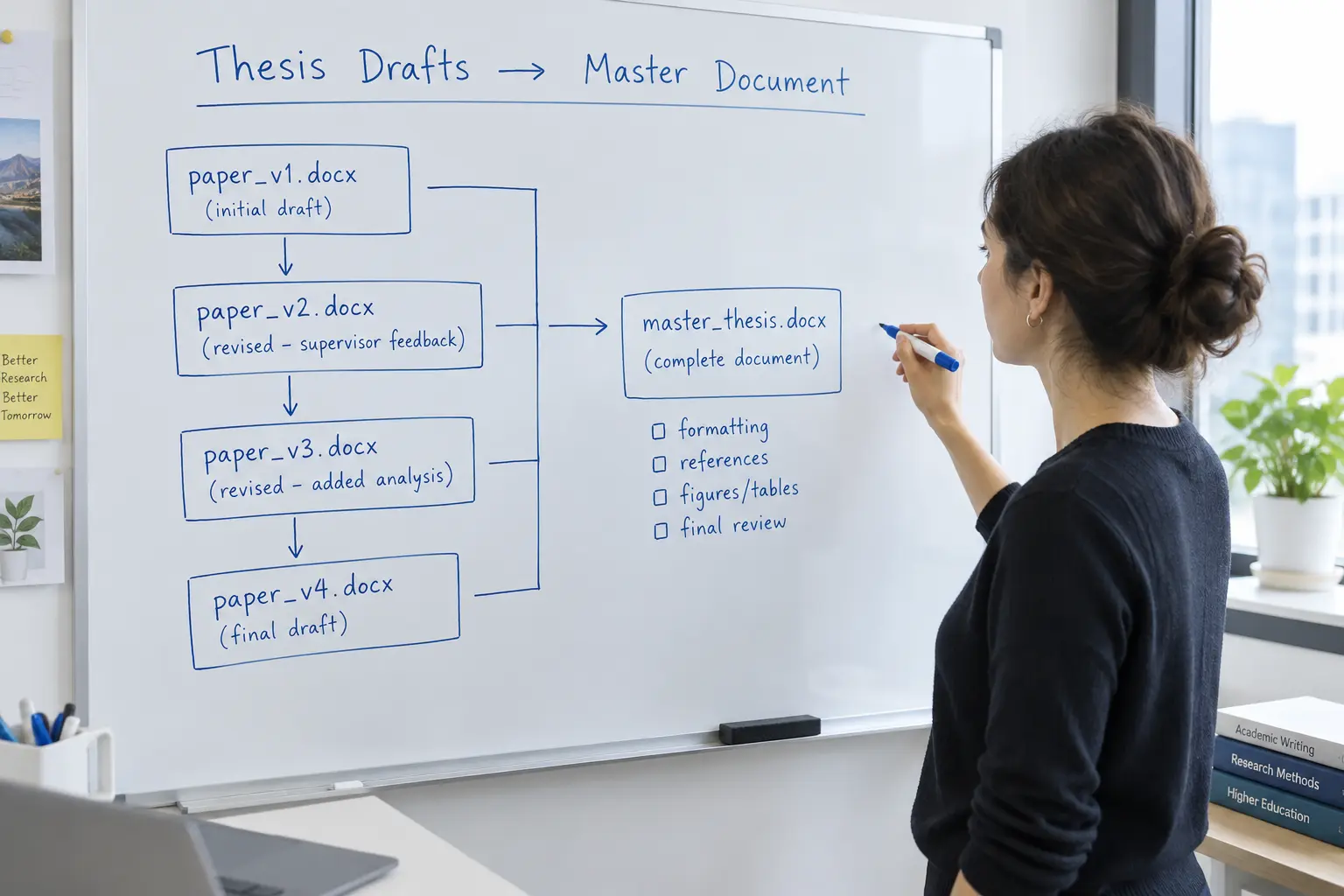
Whether you are working in Word or LaTeX, the underlying discipline is the same: define your heading levels, body text, figure captions and reference format once, as styles or macros, and apply them consistently rather than manually formatting each paper as you paste it in. In Word, this means building (or asking your graduate school for) a thesis template with named heading styles already set to your university’s required fonts, spacing and numbering, and applying those styles to every pasted-in paper rather than eyeballing the formatting to look similar. When a paper is revised after peer review, you paste the revised text into the same styled sections rather than reformatting from scratch — the style definitions, not your memory of how the last version looked, keep the document consistent.
Generic Practice 2: A LaTeX Master Document, One Preamble
The equivalent LaTeX discipline is a single master document with one preamble (fonts, margins, reference style, numbering scheme defined once) that pulls in each paper as a separate included file. A revised paper means replacing the content of that one included file; the master document’s formatting, numbering and cross-references update automatically rather than needing to be reapplied by hand. This is the same structural principle covered in general terms in LaTeX vs Word for a PhD thesis: LaTeX’s advantage compounds specifically in a thesis-by-publication project, where the number of times a chapter’s content changes after the surrounding document was first built is higher than in a monograph written straight through.
Generic Practice 3: One Reference Library, Not One Per Paper
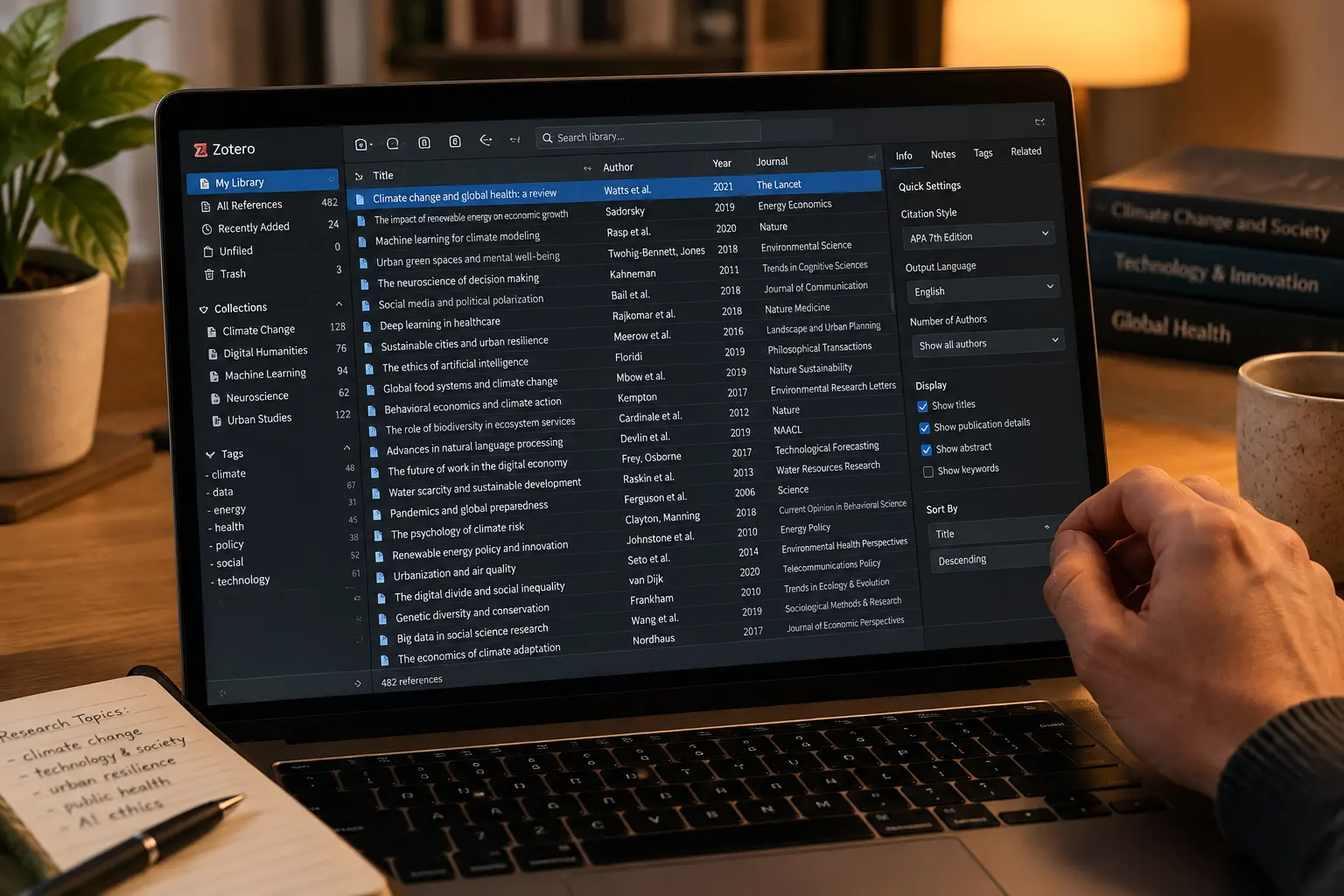
Each paper likely already has its own reference list in whatever style its target journal requires. Reformatting every citation by hand when you assemble the thesis, and again every time a paper’s reference list changes after review, is exactly the kind of repetitive, error-prone task a reference manager exists to remove. Importing every paper’s references into a single library in Zotero, Mendeley or EndNote, and generating the thesis’s own consistent reference style from that one library rather than copying each paper’s own formatted list, means a citation added or changed in one paper updates correctly across the whole thesis rather than needing to be found and fixed manually. The general comparison of which reference manager actually holds up at doctoral scale, including how each handles a multi-year, many-hundred-reference project, is covered in Zotero vs Mendeley vs EndNote for a PhD thesis.
Keeping the Connecting Chapters in Sync
The introduction and discussion chapters that link the papers together are the part most likely to go stale when a paper is revised after they were written — a sentence summarising a paper’s findings, written before a reviewer required a change to the analysis, is now describing a version of the paper that no longer exists. Build a simple habit around this rather than relying on memory: every time a paper is revised, immediately check the specific sentences in your introduction and discussion that summarise its findings, methodology or contribution, and update them in the same sitting. Treating this as a five-minute task done immediately, rather than a full read-through saved for the final assembly, is what actually prevents the connecting chapters from contradicting the papers they are meant to be introducing.
If your thesis reached the point of publishing a chapter as a standalone paper, or is about to, the general process for that step — prior-publication policy, authorship with supervisors, journal choice and the rewrite a standalone paper usually needs — is covered in how to publish a paper from your PhD thesis, and applies equally whether the paper came before or after the thesis chapter that contains it.
Version Control and Backup Discipline
A thesis by publication accumulates more distinct versions of more distinct documents than a monograph does: each paper’s pre-submission draft, its reviewed and revised versions, and its accepted final version, alongside your own evolving thesis master document. Name files with a clear version convention (a date or a version number, not “final,” “final2” and “final_reallyfinal”), and keep a single source-of-truth master document that always reflects the accepted or most recent version of each paper, rather than working from whichever copy happens to be open. If you use LaTeX, a version-control system such as Git makes this discipline close to automatic; if you use Word, a consistent manual naming and filing convention, checked at the start of every writing session, does the same job less elegantly but adequately.
Back up the master document and every paper version somewhere outside your own laptop — a university-provided cloud drive or research data storage service, not only a personal account — and confirm your supervisor or graduate school’s expectations for where thesis drafts should be stored while the examination is still pending, since some institutions have specific data-handling requirements for unsubmitted thesis material.
Where an AI Drafting Aid Fits
None of the practices above needs a specialised tool — a well-built Word or LaTeX template, a disciplined reference-manager habit and a clear version-naming convention will get you through a thesis by publication on their own. If you do use an AI writing aid, keep it in the drafting layer that sits on top of that discipline — for example, as a second pair of eyes on the connecting prose in the introduction and discussion — and check every sentence it touches against the current version of each paper yourself. Tesify has been used by over 9,000 students across more than 15,000 chapters, and the thesis itself, including every formatting decision and every word of the final text, stays 100% written by you. No tool replaces your own template, your own reference library and your own revision discipline.
Frequently Asked Questions
Why is thesis-by-publication formatting harder than a monograph?
Because each chapter is a paper that may still be moving through peer review, drafted to a different journal’s house style, sometimes by more than one author, and revised after your own thesis draft already incorporated an earlier version — every revision risks breaking consistency if fixed manually each time.
Should I use Word or LaTeX for a thesis by publication?
Either can work if you build a proper master document with consistent styles or macros defined once. LaTeX’s advantage in cross-reference and numbering automation compounds specifically in this format, where content changes after assembly more often than in a monograph.
How do I stop reference formatting breaking every time a paper is revised?
Import every paper’s references into one reference-manager library rather than keeping separate per-paper reference lists, and generate the thesis’s own consistent citation style from that single library.
What is the biggest formatting mistake in a thesis by publication?
Letting the introduction and discussion chapters’ summaries of each paper go stale after the paper itself is revised in peer review. Update the relevant summary sentences immediately when a paper changes, not at final assembly.
Do I need special software to format a thesis by publication?
No. A disciplined Word or LaTeX master document and a single reference-manager library will do it. An AI drafting aid can sit on top of that, not replace the underlying template discipline.
Can Tesify format my thesis to my university’s exact specification?
Do not rely on any tool, Tesify included, for that: your own university-specific formatting template and your own final checks against your institution’s current regulations are what count.
What claims does Tesify actually make?
Used by over 9,000 students across more than 15,000 chapters, with the thesis itself remaining 100% written by you.
How do I keep chapters written for different journals feeling like one thesis?
Apply one consistent set of heading, body and figure styles across every chapter regardless of the original journal’s house style, and use a consistent authorial voice in the connecting introduction and discussion chapters that frame each paper.
What should I do first, before formatting begins?
Confirm your specific institution’s thesis-by-publication rules — minimum paper count, word limits, authorship requirements — before building your template, so you are not reformatting later to fit a rule you discover partway through.
How should I name and organise my files across multiple paper revisions?
Use a clear date or version-number convention rather than labels like “final” or “final2,” and keep one source-of-truth master document that always reflects the most recent accepted version of each paper.
Does this workflow change if I only have one or two papers rather than several?
The underlying discipline (one master document, one reference library, immediate updates to connecting chapters) still applies, but the risk of drift is lower with fewer moving papers — it becomes more important as the number of papers, authors and revision rounds grows.