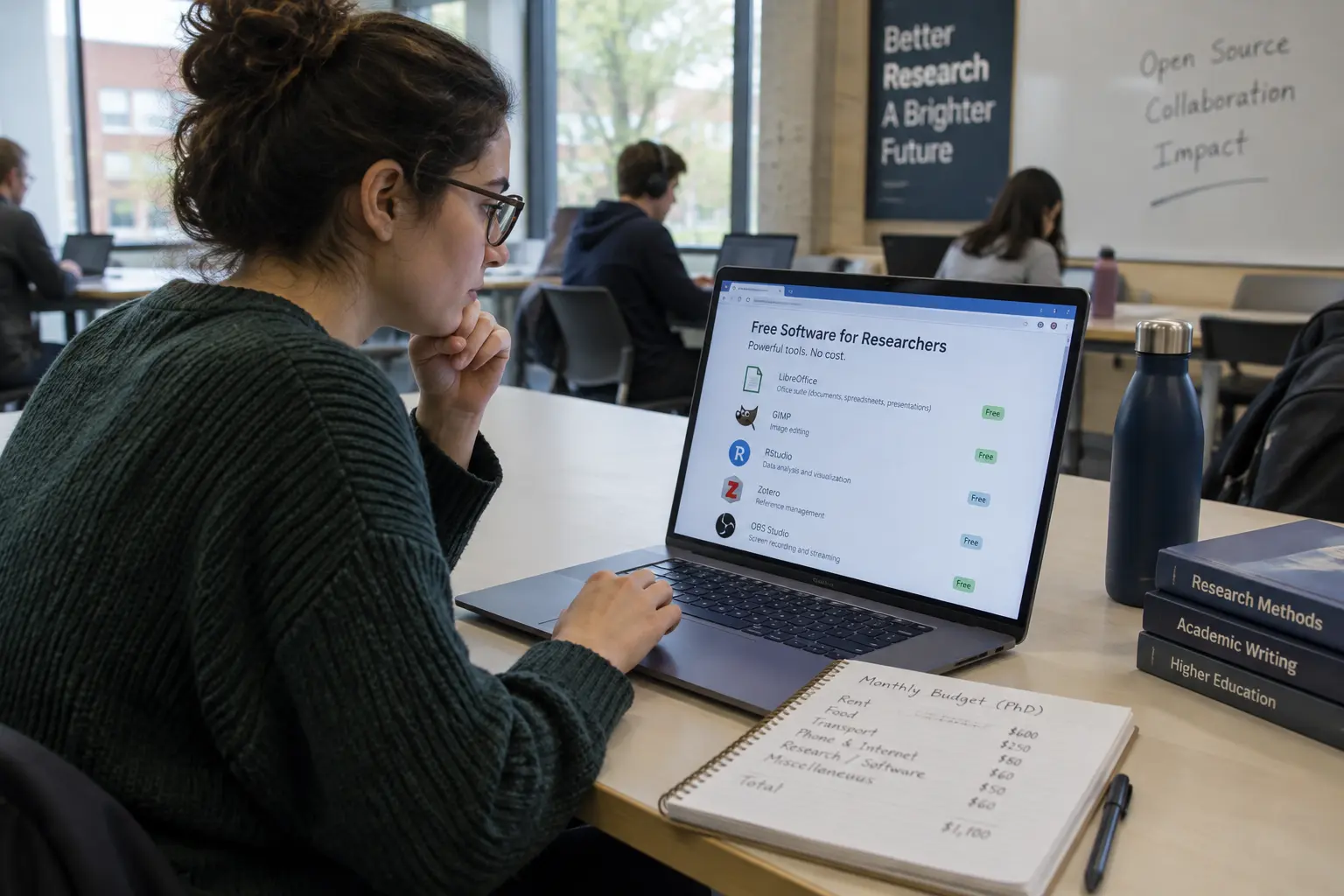
A UK doctoral stipend does not stretch to a subscription for every tool a thesis touches, and “free AI tool for doctoral researchers” is one of the most searched terms among candidates trying to work out what they can actually use without paying. The honest answer is that “free” means genuinely different things across three categories of tool a PhD researcher encounters — general-purpose AI chatbots, specialised free-tier academic tools, and a thesis-specific platform’s own free plan — and the gap between what free covers and what it does not is exactly where a researcher on a stipend needs to look before committing time to any one workflow.
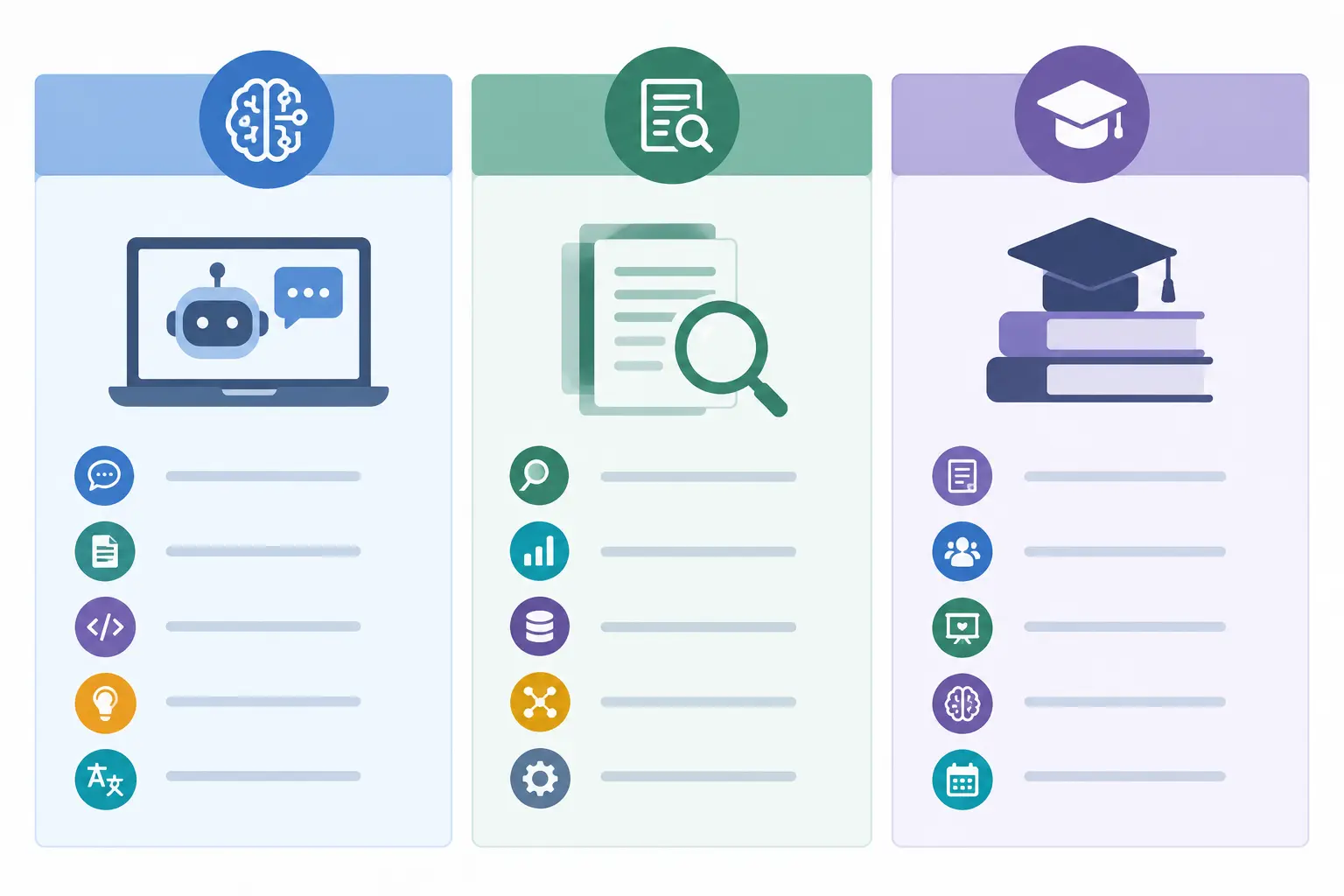
Three different kinds of “free,” and why they are not interchangeable
A general-purpose AI chatbot’s free tier is built for broad, short-session use — drafting an email, summarising a short passage — and its terms and data-handling practices are written for that use case, not for months of work on an unpublished, unexamined thesis. A specialised academic tool’s free tier, of the kind this site’s own comparisons of Connected Papers and ResearchRabbit and the broader AI research assistant landscape cover, is usually free precisely because it does one narrow job (literature discovery, reference formatting) rather than the whole thesis-writing workflow. A thesis-specific platform’s free plan sits between the two: built for the actual doctoral workflow, but with commercial limits somewhere, since building and maintaining that workflow is not free to run.
What do real free-tier caps actually look like in practice?
Two concrete, verified examples from this site’s own tool comparisons illustrate the pattern rather than leaving it abstract. Connected Papers, a literature-mapping tool, caps its free tier at a limited number of graphs a month before nudging toward a paid Academic plan that removes the cap — usable for occasional discovery sessions, but a candidate running many parallel literature searches across a multi-strand thesis will hit that cap. ResearchRabbit, by contrast, describes its sign-up and core use as free on its own site with no disclosed usage cap in the material reviewed for that comparison — a materially different free-tier shape for a broadly similar job. Neither pattern is inherently better; the point is that “free” covers both “capped, nudging toward paid” and “open, no stated cap” within the same narrow category of literature-mapping tool, which is exactly why checking the specific tool’s own current terms matters more than trusting the word “free” alone.
What does Tesify’s own free plan actually offer?
Tesify’s platform listing states plainly that a free plan is available on the core thesis-writing product — chapter planning, section drafting, reference formatting in Harvard, Vancouver or a department’s house style, and similarity checking before submission. Beyond the fact that a free plan exists, the specific limits of that free tier (how many chapters, how many words, which features gate to a paid tier) are the kind of detail that changes as any product evolves — the reliable way to know exactly what is included today is to check the sign-up flow itself rather than rely on a figure quoted in an article, since a stated limit here could be stale by the time you read it. What can be stated plainly: Tesify is used by over 9,000 students, has planned or drafted over 15,000 thesis chapters, and every word that ends up in your submitted thesis is written by you — the tool structures and drafts alongside you, not instead of you, which matters for the same reason this site’s own guide to putting unpublished thesis data into an AI tool takes authorship and confidentiality seriously rather than treating them as a footnote.
What do free tiers typically stop covering, across this market generally?
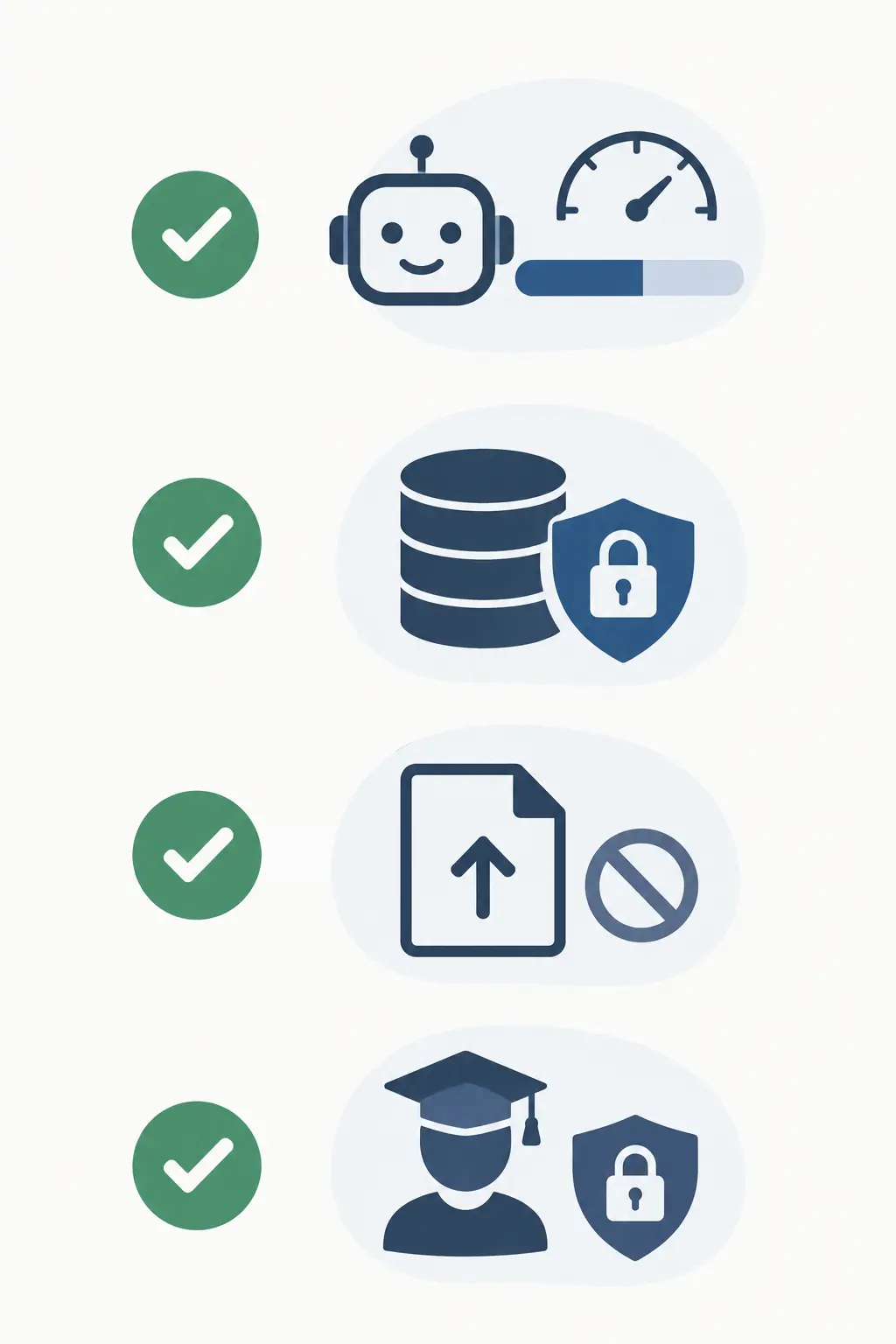
Without claiming this describes any one named product’s specific limits beyond the two verified examples above, freemium academic software as a category commonly gates in a few predictable places: a cap on the volume of work processed at once, export or formatting features held back for a paid tier, and priority processing speed during busy periods. A researcher evaluating any specific free tool should check three things directly on that tool’s own current pricing page before relying on it for a multi-year project: what the actual usage cap is, whether the cap resets and how often, and whether the free tier is genuinely usable at doctoral scale or functions mainly as a trial funnel toward a paid plan.
Does “free” mean your data is used to train the model?
Not necessarily, but the terms vary enormously between tools and this is the single most important thing to check before using any free AI tool on unpublished doctoral work — this site’s own guide to putting unpublished thesis data into an AI tool sets out the five specific questions worth asking of any tool’s terms: whether it trains on your content, where the data is processed, whether it can be deleted on request, whether your institution’s own data protection or research ethics approval already restricts where research data can go, and whether the free tier specifically has different data-handling terms from the paid tier at the same provider — a distinction some providers draw explicitly (free-tier content sometimes used for training in ways paid-tier content is not) and some do not, which makes checking the specific tool’s current terms non-negotiable rather than a formality.
Who is a free tier genuinely enough for, and who should budget for a paid one?
A free tier is usually genuinely sufficient for a candidate in the first year, still scoping the literature and working out a chapter structure, where the volume of work in any given month sits comfortably under most tools’ free caps. It becomes tighter in the writing-up year, when several chapters, a growing reference list running to hundreds of sources, and repeated full-manuscript similarity checks all happen inside a compressed few months — precisely the point at which usage caps calibrated for occasional use start to bind. A practical rule: budget for the possibility of a modest paid upgrade in your final year specifically, even if the earlier years run entirely on free tiers, rather than assuming whatever was free in year one will still cover your workload unchanged in year three or four.
A practical checklist before adopting any free AI tool for your thesis
Four checks, in order: first, read the tool’s current terms on training and data retention specifically for the free tier, not just the marketing page. Second, check the actual usage cap against your realistic workload — a cap generous enough for a single literature-review sub-theme may be unworkable across a whole 80,000-word thesis. Third, check what happens to your work if you later need to export it or stop paying, since a free tool that locks formatted references or drafted chapters into a proprietary format is a real switching cost later, not a hypothetical one. Fourth, check whether your specific institution’s own policy on AI tool use — increasingly common as a named clause in codes of practice — restricts which tools are acceptable to use on submitted work at all, since “free” and “permitted by your university” are two entirely separate questions.
Recommendation
Do not choose a free AI tool on the strength of the word “free” alone — check the specific usage cap, the specific data-handling terms for the free tier, and your own institution’s policy, in that order, before committing real thesis work to it. For narrow, well-defined jobs (literature mapping, reference formatting), the free-tier specialised tools this site has compared elsewhere are usually genuinely sufficient for the whole candidature. For the broader chapter-planning-and-drafting workflow specifically, Tesify’s free plan is a reasonable starting point to evaluate directly against your own workload, checking its current limits at sign-up rather than assuming a figure quoted anywhere else, including this article, is still current.
Frequently asked questions
Is Tesify actually free, or is “free plan available” just a trial?
Tesify’s own product listing states a free plan is available on its core thesis-writing product; the specific current limits of that plan are best checked directly at sign-up, since free-tier details on any software product change over time and a figure quoted in an article can go stale.
Will using a free AI tool on my thesis count as an integrity violation?
This depends entirely on your specific institution’s own AI-use policy and on how the tool is used — a tool that helps you plan, draft alongside you and check your own writing is different from one that generates content presented as your own without disclosure; check your institution’s current policy and disclose AI tool use as required, rather than assume either way.
Are free AI research tools safe to use with unpublished data?
It depends on the specific tool and what you put into it — using a literature-mapping tool to search already-published papers carries little risk, while pasting unpublished thesis text or participant data into a general-purpose AI chatbot’s free tier is a different, higher-risk action that this site’s dedicated guide on the topic covers in full.
Do free tiers usually reset monthly?
This varies by provider — some free tiers reset on a monthly or similar cycle, others offer a fixed lifetime allowance, and some are effectively unlimited within narrow feature limits; check the specific tool’s own current terms rather than assume a convention applies universally.
Should I use several different free tools instead of paying for one?
For narrow, well-defined jobs this is often the more cost-effective approach — a free literature-mapping tool plus a free reference manager plus a free plan on a thesis-writing platform can cover most of a candidature’s tooling needs without payment, provided each tool’s specific limits and data-handling terms have been checked individually rather than assumed to be generous because the word “free” appears on the landing page.
What happens to my work if a free tool’s usage cap resets mid-project?
This depends on the specific tool — some retain previously created work and only cap new activity, while others may restrict access to older content once a cap is reached; check this specifically before relying on a free tool for content you cannot afford to lose access to, and keep your own backup copy of anything drafted inside any third-party tool regardless of its stated policy.
Is a tool that is free forever always better than one with a paid tier?
Not necessarily — a genuinely unlimited free tier has to be funded somehow, whether through advertising, data use, or a small proportion of users who eventually pay, so a tool that is upfront about a capped free tier and a clear paid upgrade path is not automatically a worse choice than one marketed as free forever with terms that are harder to find.
How do I know if a “free” claim on a tool’s homepage is actually accurate?
Check the tool’s dedicated pricing or terms page rather than the homepage’s marketing copy alone — a homepage’s “free” claim and a pricing page’s actual tier structure sometimes describe different things, and the pricing page is the more reliable source for the specific limits that matter to a multi-year project.
When in my candidature should I actually check whether I need to upgrade from a free tier?
At the start of your writing-up year is the practical trigger point — that is when chapter volume, reference-list size and full-manuscript checks all increase together, and checking your likely usage against a free tier’s actual cap before you are mid-chapter and blocked is far less disruptive than discovering the limit the hard way.