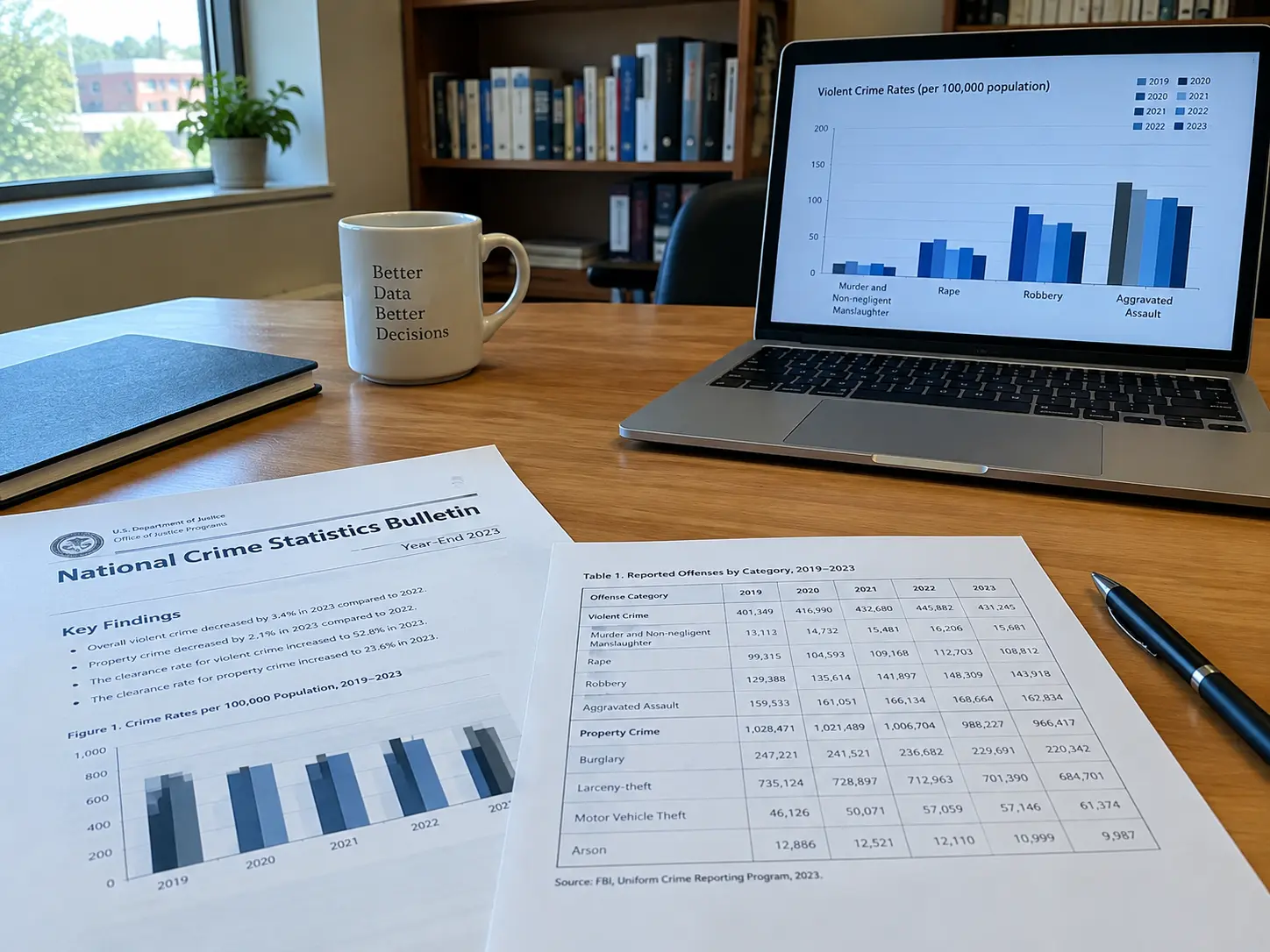
Only 36% of crime incidents measured by the Crime Survey for England and Wales (excluding fraud and computer misuse) were reported to the police in the year ending March 2026 — which means a criminology PhD recruiting victims only through police-recorded cases is missing the majority of the population it claims to study.
| Measure | Figure | Source, year |
|---|---|---|
| CSEW estimated headline crime incidents, YE March 2026 | 9.6 million | ONS, 2026 |
| Change vs YE March 2025 (around 9.4 million) | No statistically significant change | ONS, 2026 |
| Proportion of CSEW headline incidents reported to police (excl. fraud/computer misuse) | 36% | ONS, 2026 |
| Comparison to YE March 2017 (first year fraud/computer misuse included) | 14% lower (11.2 million incidents then) | ONS, 2026 |
| People aged 16 and over who experienced sexual victimisation in the last year, YE March 2026 | 2.1% (around 1 million people) | ONS, 2026 |
Why does the reporting gap matter to your recruitment strategy?
If around 64% of the victimisation the CSEW measures in those crime types never reaches the police at all, any sample built exclusively from police-recorded cases, court records or a single police-liaison route is not a sample of “victims of crime” — it is a sample of the minority who reported, which is a different and non-random population. Victims who do not report can differ systematically from those who do, for reasons a thesis needs to state explicitly: fear of the offender, distrust of the police, the crime type (sexual offences and domestic abuse are widely described as under-reported relative to their prevalence), or a judgement that reporting will not lead anywhere useful. A research design that only reaches reporting victims should say so plainly in its limitations, rather than generalising findings to “victims of crime” as a whole. This is a distinct issue from access to offenders or prisoners, already covered in what ethics approval a criminology PhD needs in the UK, which focuses on National Research Committee approval for research through prisons, probation or HMPPS — a completely different route from the one covered here.

What is the CSEW actually measuring, and how does that differ from police-recorded crime?
The ONS describes the CSEW as an interviewer-administered, face-to-face survey asking people aged 16 and over who are resident in households about their experiences of crime in the past year — designed to capture victimisation regardless of whether it was ever reported, which is why it produces a fuller estimate than police-recorded crime for the crime types it covers. For a thesis, this distinction is not a technicality: police-recorded crime data and CSEW self-report data measure different things and answer different research questions. A study asking “how much crime happens” needs the survey-based estimate; a study asking “how the criminal justice system responds once a crime is reported” needs the police-recorded data instead. Naming which one your research question actually needs, and why, is worth a sentence in the methods chapter that most theses skip. The CSEW is also not the only lens on victimisation: because it samples people living in households, it does not reach people living outside them, and some crime types, such as homicide, by definition cannot be captured by asking a living respondent about their own experience — a thesis working on either of those areas needs a different data source and should say so explicitly rather than defaulting to the CSEW because it is the best-known one. Sampling frame matters here too: a household survey structurally misses people who are homeless, in institutional care, or otherwise not living in a private household at the time of the survey, which is worth naming explicitly if a thesis’s own population overlaps with any of those groups.
What governs how victims are actually treated as research participants, not just survey respondents?
The Code of Practice for Victims of Crime (the Victims’ Code) is issued by the Secretary of State for Justice under section 32 of the Domestic Violence, Crime and Victims Act 2004, and sets out the services criminal justice agencies must provide to victims. It is not a research-ethics document itself, but it defines the population a criminology thesis is drawing on and the groups eligible for Enhanced Rights: victims of the most serious crime (which the Code defines to include bereaved close relatives, domestic abuse, hate crime, terrorism, sexual offences, human trafficking and modern slavery, among others), persistently targeted victims, and vulnerable or intimidated victims. A research ethics committee will expect a researcher recruiting from those groups to have thought about trauma-informed consent, not just formal legal capacity to consent.
Where do you actually get access to victims as research participants?
Three routes are common, each with a different access negotiation and a different bias risk. Victim support organisations (Victim Support and specialist charities for particular crime types) can act as a gatekeeper to service users, but the sample is then victims who sought support, not all victims. Police force research-access agreements can reach victims through recorded cases, but inherit the same reporting limitation discussed above. Open recruitment (advertising for participants who self-identify as having experienced a specific crime type) reaches non-reporting victims that the other two routes miss entirely, but produces a self-selecting sample with its own bias, typically toward people more willing to discuss their experience. State explicitly which route (or combination) your study used and what population it therefore actually represents. A worked, illustrative comparison shows why this matters: a study recruiting exclusively through a specialist domestic-abuse charity will systematically reach people who have already disclosed to a service and are, by definition, further along a help-seeking journey than someone who has told no one; a finding about “how victims cope” drawn only from that sample says something true about service users specifically, not about victims of that crime type in general, and the thesis needs to say so in its own limitations section rather than leave the generalisation implicit. Timing also matters within each route: a victim approached while a criminal case is still active is in a genuinely different position from one approached years after a case closed, and a thesis should state explicitly at what stage in the criminal justice process its participants were recruited, since that stage plausibly shapes what they are willing or able to say.
What does trauma-informed design actually require, beyond standard ethics approval?
Standard university ethics approval covers informed consent, confidentiality and data protection; researching victims specifically adds a layer standard approval does not automatically require: a plan for managing distress during the interview or survey itself, a clear boundary on what the researcher will and will not do if a participant discloses an ongoing safety risk, and, for the Enhanced Rights groups the Victims’ Code names, awareness that a participant may be actively going through a live criminal justice process while being interviewed for research — timing and framing questions to avoid conflicting with, or appearing to influence, that live process. What ethics approval a sociology or social work PhD needs covers the parallel discipline’s approach to vulnerable-population consent in depth; a criminology thesis researching victims can reuse much of that same trauma-informed design logic, adapted for the specific involvement of a live or recent criminal justice process. Where participants are children, the assent-and-safeguarding logic in researching pupils with SEND for an education PhD transfers closely.
How is this different from researching offenders or the prison population?
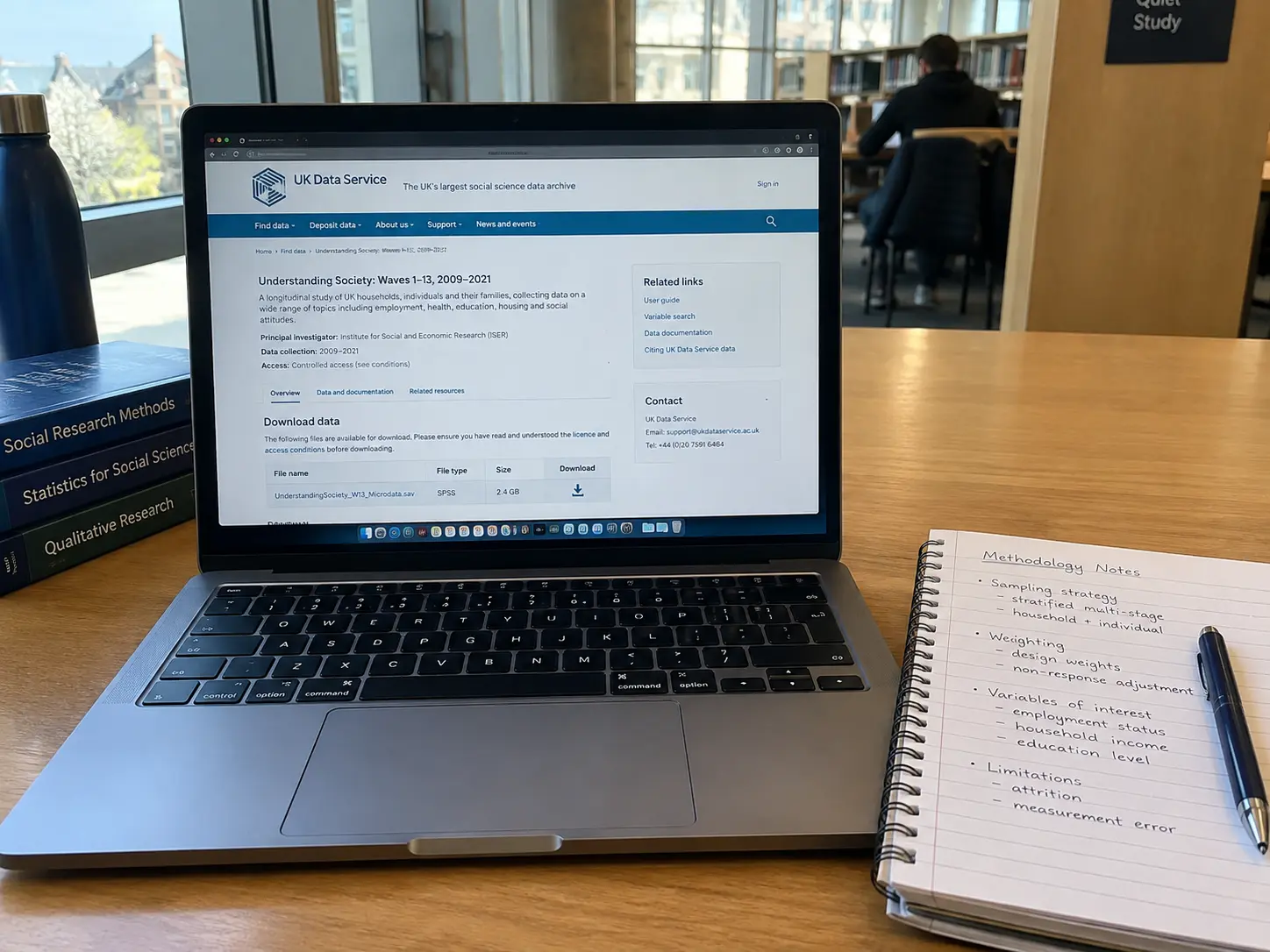
Access, ethics and the underlying research question are all distinct. Researching prisoners or offenders runs through HMPPS and the National Research Committee approval route, and the relevant data is largely administrative (offending history, sentencing, custody records). Researching victims runs through victim-support gatekeepers, police liaison or open recruitment, and the relevant national dataset (the CSEW) is a self-report survey specifically designed to capture what police-recorded data misses. A thesis studying both populations in the same project — for example, restorative justice research involving both an offender and a victim — needs to satisfy both access routes separately, not treat one ethics approval as covering both. If you want to analyse survey microdata directly rather than only cite the published headline figures, the secure-access and licensing routes set out in where medical and epidemiology PhD students get UK data show the kind of application, timeline and data-handling commitments to plan for; check the CSEW’s own access conditions with the data provider before building a chapter around it.
Frequently asked questions
What proportion of crime does the CSEW estimate goes unreported to police?
Only an estimated 36% of CSEW headline crime incidents (excluding fraud and computer misuse) were reported to the police in the year ending March 2026, so roughly two in three were not.
Is the CSEW the same as police-recorded crime statistics?
No. The CSEW is a self-report household survey capturing victimisation whether or not it was reported; police-recorded crime counts only incidents that reached and were logged by the police, a smaller and non-random subset.
What is the Victims’ Code, and does it apply to my research?
It is a code issued under section 32 of the Domestic Violence, Crime and Victims Act 2004 setting out the services criminal justice agencies must provide to victims. It is not a research-ethics document, but it defines the Enhanced Rights groups an ethics committee will expect a trauma-informed design to account for.
Can I recruit victims only through the police?
You can, but the sample will represent only the reporting minority (36% of CSEW-measured incidents in the crime types covered), and the thesis needs to state this limitation explicitly rather than generalise to victims of crime as a whole.
Does open recruitment solve the reporting-bias problem?
It reaches non-reporting victims the other routes miss, but introduces a different bias — toward people willing to self-identify and discuss their experience, which is itself worth naming as a limitation.
Do I need a different ethics approval to research victims than to research general participants?
Standard ethics approval is the baseline, but researching victims specifically calls for an additional, explicit plan for managing distress and a stated boundary on responding to disclosure of ongoing risk.
Can I study both victims and offenders in the same project?
Yes, but each population has its own access route and ethics considerations — HMPPS/National Research Committee approval for offenders, victim-support or open-recruitment routes for victims — and both need to be satisfied, not treated as interchangeable.
Where can I find the current CSEW figures for my own literature review?
The ONS publishes the bulletin “Crime in England and Wales” with accompanying appendix tables; always cite the specific year-ending edition you opened, since the headline figures update with each release.
Has crime measured by the CSEW changed recently?
The ONS found no statistically significant change between the year ending March 2025 (around 9.4 million incidents) and the year ending March 2026 (9.6 million), and headline crime remains 14% lower than in the year ending March 2017.
Are victims of sexual offences and domestic abuse under-represented in reporting-based samples?
These crime types are widely described as under-reported to police relative to their prevalence, which is a specific reason a police-recorded-only sample is a poor fit for research on them.
Does the CSEW cover the whole of the UK?
No — as its name states, the Crime Survey for England and Wales covers only England and Wales; Scotland and Northern Ireland run their own separate crime surveys, and a thesis with UK-wide scope needs to cite the relevant survey for each nation rather than extending CSEW figures beyond their coverage.
How does recruiting a child or vulnerable adult victim change the design?
It adds a capacity and safeguarding layer on top of everything else covered here — consent and assent processes matched to the participant’s actual capacity, and a pre-agreed safeguarding protocol, following the same logic set out for other vulnerable research populations on this site.
Building a design the national data actually supports
The reporting gap in the table above is the single most consequential fact for a victims-focused criminology design, and it is worth stating explicitly in your own methods chapter rather than assuming an examiner already knows it. Tesify is used by 9,000+ students across 15,000+ chapters to work through exactly this kind of population-and-access reasoning, and the thesis stays 100% written by you.