Researching pupils with SEND for an education PhD means working inside a statutory framework, not just a school’s own consent form. The SEND Code of Practice 2015, safeguarding requirements, gatekeeper access through schools, and capacity-appropriate assent from the pupils themselves all shape the design before a single question is asked. Here is what actually has to be in place, step by step.
Step 1: understand the statutory framework your population sits inside
The SEND Code of Practice is statutory guidance on duties, policies and procedures relating to Part 3 of the Children and Families Act 2014, covering children and young people aged 0 to 25 in England who have special educational needs or disabilities. It sets out the legal basis for identification, support, parental involvement and integrated education, health and care planning — and a thesis researching this population needs to show it understands that legal and administrative context, not just the pedagogical one. Where a participant holds an Education, Health and Care Plan, that plan is itself a legal document shaping what support they receive; a thesis that treats SEND as a purely descriptive category, without acknowledging the statutory and administrative structure around it, misses something an education examiner will notice.
Step 2: work out who your actual gatekeeper is, and what they control
A school, not the researcher, controls access to pupils with SEND, and the gatekeeper’s role goes beyond simply agreeing to the study. Building an interview or focus-group guide for a qualitative education PhD thesis already covers BERA’s fifth-edition gatekeeper requirements in general; for a SEND population specifically, the gatekeeper (usually the SENCO or headteacher) is also assessing whether the study fits reasonably around a pupil’s existing support plan, whether it risks disrupting routines that matter disproportionately to some SEND pupils, and whether the researcher’s own safeguarding clearance is in order. Expect to be asked about that clearance: an enhanced DBS check covering work with children is commonly requested, so confirm the exact requirement with the school and your university before you make the approach.
Step 3: design consent and assent for the population you actually have, not an idealised one
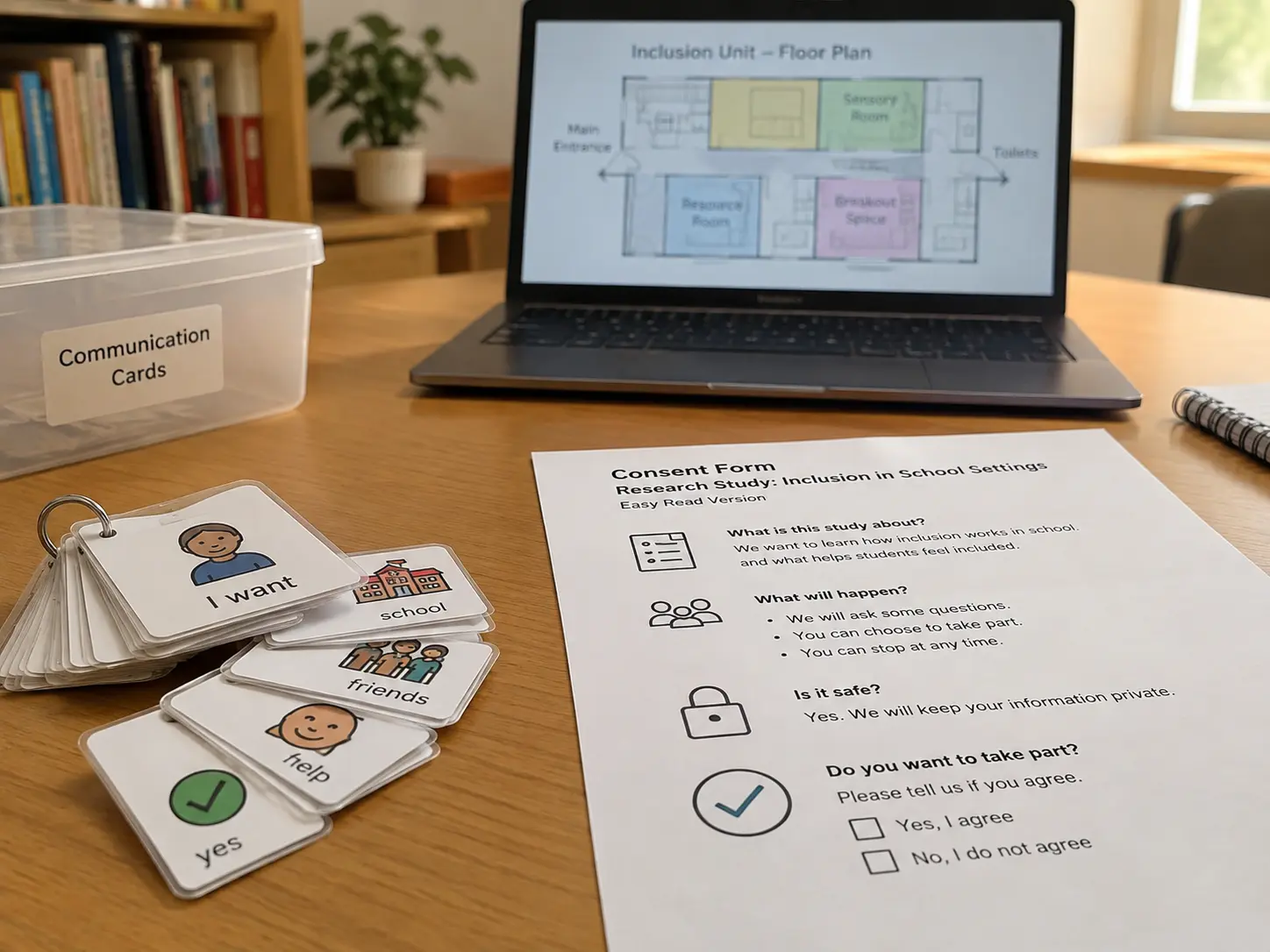
Parental or carer consent is necessary but not sufficient. BERA’s fifth edition (2024) states that principles of consent apply to children and young people as well as adults — termed assent for those under the age of legal consent — and it endorses the UN Convention on the Rights of the Child, under which children capable of forming their own views have the right to express them in matters affecting them. It also asks that information sheets and consent forms be designed for participants who differ in age, reading ability and attention span. For a SEND population, that assent process has to be built around the actual communication needs of the participants — which may mean visual supports, simplified language, longer processing time, or working with a trusted adult who can help a pupil express agreement or discomfort in the way that works for them, rather than a standard written information sheet a pupil cannot access. A pupil who cannot read a consent form is not a pupil who cannot assent; the thesis needs to show how their own agreement was actually established, not assumed.
Step 4: justify your specific SEND sub-population and setting
“SEND” spans an extremely wide range — the Code groups needs into four broad areas (communication and interaction; cognition and learning; social, emotional and mental health; sensory and/or physical needs), covering autism, specific learning difficulties like dyslexia, speech, language and communication needs, physical disabilities and more — and a thesis studying “pupils with SEND” without narrowing to a specific need or a specific setting (mainstream inclusion unit, specialist resource provision, special school) reads as under-scoped. State explicitly which need or needs the study covers, why that scope was chosen over the wider category, and how the setting shapes what is actually being studied — a mainstream inclusion unit and a special school are different research contexts even for pupils with an identical diagnosis.
Step 5: choose methods that do not depend on capacities the population may not have
A semi-structured interview built for a typically developing adolescent may not work for a pupil with significant communication needs, and defaulting to observation alone because interviewing feels too difficult is itself a methodological choice that needs justifying, not an automatic substitute. Options worth building into the design include: structured or visually supported interview formats, working through a trusted adult as a communication bridge without letting that adult answer for the pupil, or a mixed approach that triangulates observation with whatever communication method the pupil actually uses day to day. The method has to fit the population, not the other way round.
Step 6: build in the safeguarding and disclosure protocol before you start, not after
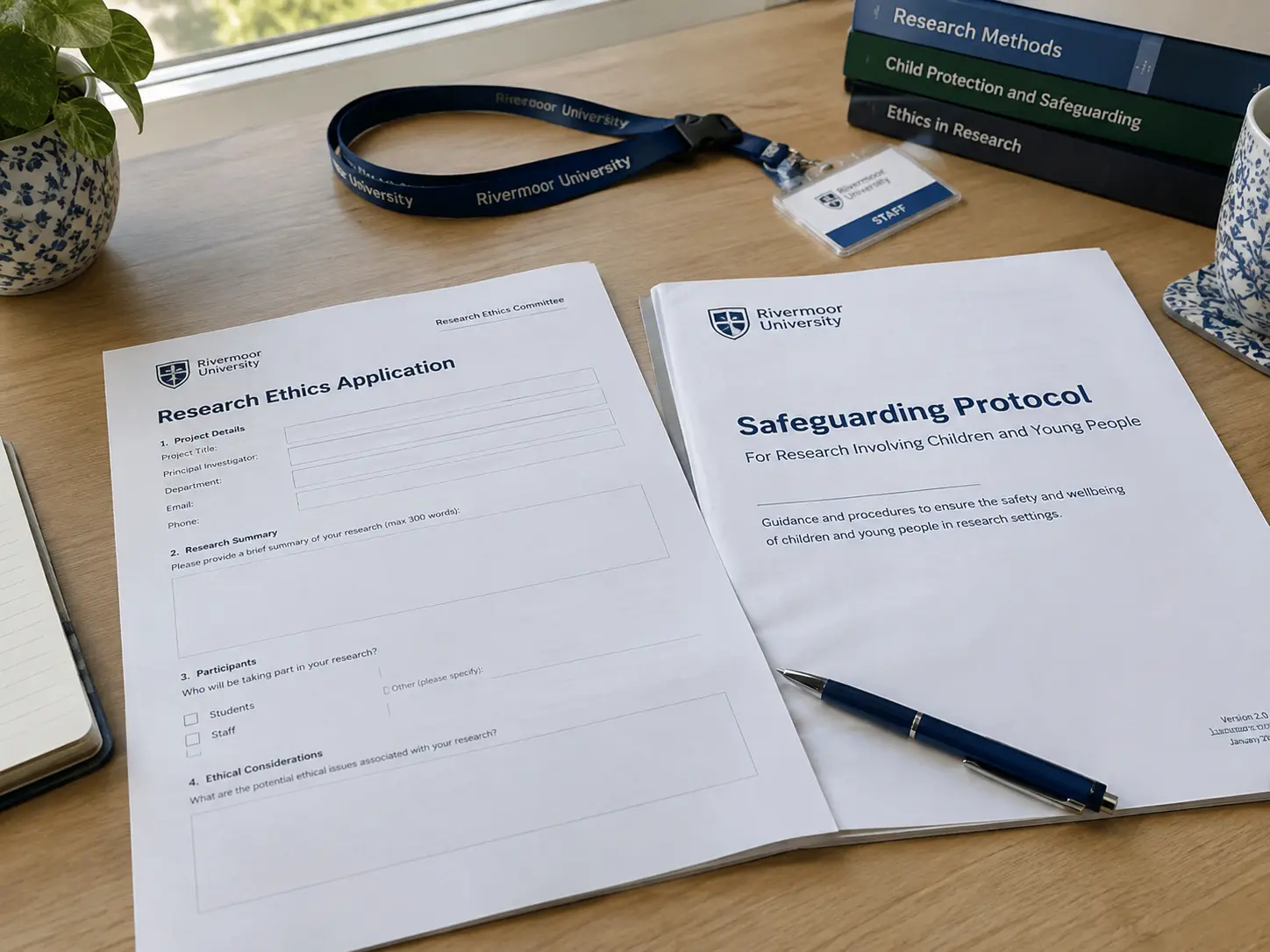
Working with a SEND population can raise the likelihood of a researcher encountering a safeguarding concern, a disclosure, or visible distress during data collection, and the thesis’s ethics section needs a specific, pre-agreed protocol for exactly that: who is told, how quickly, and what the researcher’s own limits of confidentiality are, stated to participants and gatekeepers in advance rather than worked out in the moment. An ethics application that only restates generic university boilerplate about confidentiality, without addressing this population-specific risk directly, is the kind of gap a REC or an examiner is trained to spot. Agree the protocol jointly with the school’s own designated safeguarding lead before data collection begins, not as a courtesy, but because the school’s existing safeguarding procedures and the researcher’s own disclosure route need to align — a mismatch between the two, discovered mid-study, is far harder to resolve than one settled on paper in advance.
Step 7: write the methods chapter so the population’s own needs are visible in every decision
Every choice above — sub-population, setting, consent format, method, safeguarding protocol — should be traceable in the methods chapter back to a specific feature of the population, not presented as a generic template applied to a SEND group as an afterthought. What ethics approval a sociology or social work PhD needs covers the parallel discipline’s approach to vulnerable-population consent, useful as a comparison for how another field structures the same underlying problem; which theoretical framework an education PhD or EdD should use is worth revisiting once the population is settled, since a framework like Bronfenbrenner’s ecological systems model sits particularly naturally around a SEND population moving between home, school and specialist support.
Step 8: reflect the population accurately in your research proposal and ethics application
The research proposal is where the gatekeeper, the ethics committee and, later, the examiner all form their first impression of whether the population has been thought through properly. Writing a PhD research proposal in education covers the proposal’s general structure; for a SEND population specifically, the proposal needs to name the sub-population and setting precisely (not simply “SEND pupils”), set out the consent and assent process in enough detail that a reviewer can see it is workable, and state the safeguarding protocol explicitly rather than gesturing at “standard university procedures.” An ethics committee reviewing a vulnerable-population application is looking for evidence the researcher has anticipated the specific risks of this population, not a generic template with “SEND” inserted into it.

What does a well-scoped SEND research design actually look like?
Pulling the steps together, a well-scoped design names a specific need or needs (for example, autistic pupils in a mainstream secondary inclusion unit, rather than “SEND pupils” generally), states the legal and administrative context those pupils sit inside (EHCP status, the local authority’s SEND provision), sets out a consent and assent process matched to the population’s actual communication needs, chooses methods that do not assume capacities the population may not have, and states a specific safeguarding protocol rather than a generic one. Each of those five elements should be visible and cross-referenced in the methods chapter, so an examiner reading it can trace every methodological choice back to a real feature of the population being studied, not to convenience or a template. A hypothetical, illustrative title shows the contrast: “Exploring the Experiences of SEND Pupils in School” signals none of the five elements and reads as under-scoped before the first chapter is even opened; “How Autistic Pupils in Mainstream Secondary Inclusion Units Describe Their Own Support Needs: A Visually Supported Interview Study” signals the specific need, the setting, and the method’s fit to the population in a single sentence — the kind of specificity an education examiner is looking to see carried through the whole thesis, not just the title page.
Frequently asked questions
Do I need an enhanced DBS check to research pupils with SEND?
Expect to be asked for one. An enhanced DBS check covering work with children is commonly requested before a school will consider a research request involving pupils with SEND; confirm the exact requirement with the school and your university.
Is parental consent enough on its own?
No. BERA’s guidelines, which endorse the UN Convention on the Rights of the Child, apply the principles of consent to children too — as assent, sought in a form appropriate to their age and communication needs.
What if a pupil cannot read a standard consent or information sheet?
Adapt the format — visual supports, simplified language, or working through a trusted adult — rather than treating an inability to read the standard form as an inability to assent at all.
Should I study “SEND” as a single category?
Generally no. Narrow to a specific need or needs and a specific setting, and justify that scope explicitly rather than treating SEND as one homogeneous population.
Who is the actual gatekeeper for access to SEND pupils?
Usually the school, through the SENCO or headteacher, who is assessing fit with existing support plans and safeguarding clearance alongside the research request itself.
What should my safeguarding protocol cover?
A specific, pre-agreed plan for who is told and how quickly if a disclosure or safeguarding concern arises, stated to participants and gatekeepers before data collection starts, not improvised during it.
Can I use interviews with a SEND population?
Yes, but the format may need adapting — structured or visually supported formats, or a trusted adult as a communication bridge — and the choice should be justified against the specific population’s communication needs.
Does an EHCP matter to my research design?
Yes — an Education, Health and Care Plan is a legal document shaping a participant’s support, and a thesis that ignores this administrative and legal context around a participant’s SEND status is missing part of the population it is actually studying.
What is the biggest scoping mistake in this kind of thesis?
Treating “SEND” as one homogeneous population rather than naming a specific need and setting — it is the single fastest way to read as under-scoped to a reviewer or examiner.
Does the SEND Code of Practice apply outside England?
No — it is statutory guidance specific to England under the Children and Families Act 2014. Education and additional-support policy is devolved, so a thesis based in Scotland, Wales or Northern Ireland needs to identify and cite the relevant framework for that nation instead, not assume the England-specific Code applies.
Designing around the population you actually have
Every step above comes down to the same discipline: building the research design around the real communication needs, legal context and setting of the population, rather than a generic template. Tesify is used by 9,000+ students across 15,000+ chapters to work through a methodology chapter section by section, and the thesis stays 100% written by you — the structure is a guide, not a substitute for your own population-specific reasoning.